Voice Cloning Attacks on Insurance Call Centers: Detection and Prevention
How fraudsters use AI voice cloning to impersonate policyholders in insurance call centers, and the technical and procedural defenses insurers need to deploy.
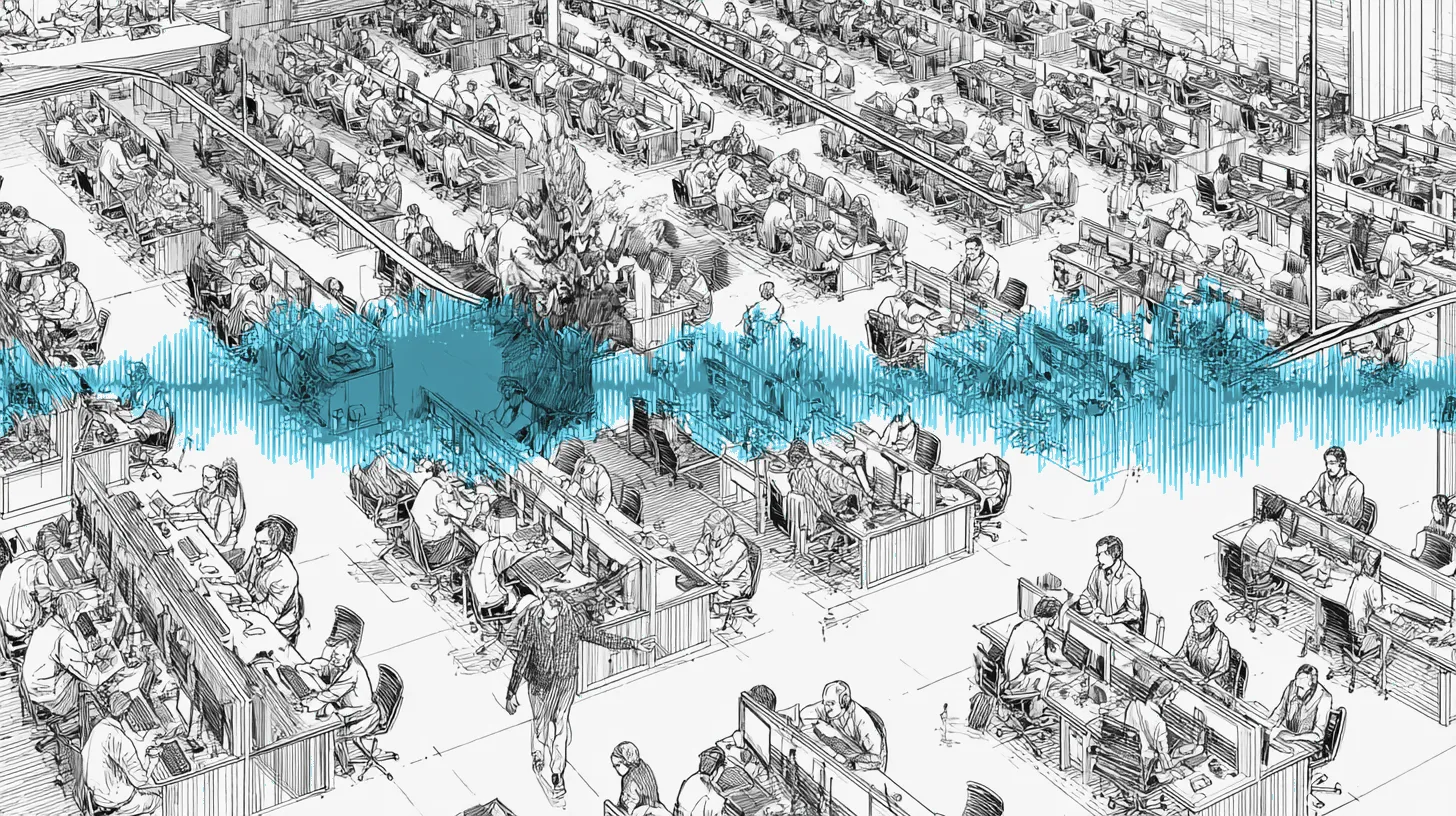
In early 2024, Hong Kong police disclosed that a finance worker had transferred about US$25.6 million after a video call with what appeared to be the company’s CFO and several colleagues. Every other person on the call was a deepfake. The case made global headlines, but it illustrated a threat vector that insurance companies face daily through a far more common channel: the telephone.
Insurance call centers handle sensitive transactions — claim initiations, policy changes, beneficiary updates, payment redirections. Each of these interactions relies, to varying degrees, on voice-based identity verification. And voice alone is no longer a reliable signal of who is calling.
This article is the operational playbook: how attacks reach the call center, why each verification layer fails, and how to build a risk-tiered defense. For the policyholder-impersonation scenarios behind it, see AI Voice Fraud in Insurance; for how detection works, see Voice Cloning Detection in Insurance.
The State of Voice Cloning Technology
Voice cloning has undergone a step-change in accessibility and quality. As recently as 2022, producing a convincing voice clone required lots of clean audio and significant technical expertise. By 2026, the landscape is unrecognizable.
Current capabilities
Sample requirements have collapsed. Commercial instant-cloning services such as ElevenLabs recommend roughly one to two minutes of clean audio. Microsoft’s VALL-E research demonstrated cloning from a 3-second sample in 2023, and OpenAI said in 2024 that its Voice Engine preview needed a single 15-second sample — and chose not to release it widely. Open-source voice conversion models such as RVC can be trained on around ten minutes of speech.
Real-time operation is standard. Multiple tools now support real-time voice conversion with latency low enough to go unnoticed on a phone call. The fraudster speaks naturally, and the output sounds like the target voice, with natural intonation and emotional variation.
Telephone conditions help the attacker. Telephony already compresses audio to narrow bandwidth (300 Hz to 3.4 kHz for standard PSTN, up to 7 kHz for HD Voice). This compression masks many of the artifacts that might reveal synthetic audio in higher-fidelity contexts. A voice clone that might sound slightly artificial on studio monitors can sound natural through a phone line.
Cost is negligible. Consumer voice cloning services range from free tiers to low-cost monthly plans. The technical barrier is effectively zero.
Where fraudsters source voice samples
Obtaining a target’s voice sample is straightforward:
- Social media: Video content on Instagram, TikTok, YouTube, and LinkedIn provides clean audio. A single interview clip or conference presentation yields more than enough.
- Prior call recordings: Some insurance interactions are recorded and accessible to the policyholder. A fraudster with account access can request these recordings.
- Voicemail greetings: A short voicemail greeting can be enough for modern cloning tools.
- Public records: Court proceedings, regulatory hearings, and media appearances are publicly accessible.
- Social engineering: Calling the target under a pretext and recording the conversation.
For high-value targets — business owners, high-net-worth individuals — voice samples are typically available within minutes of searching.
Attack Vectors in Insurance Call Centers
Voice cloning enables several specific attack patterns against insurance operations.
1. Policyholder impersonation for claim initiation
The most direct attack: a fraudster calls to report a claim using the policyholder’s cloned voice. If the insurer uses voice-based verification — either formal voiceprint matching or informal recognition by agents who know the customer — the cloned voice may pass.
This is particularly effective for claim types that don’t require physical inspection:
- Travel insurance claims (trip cancellation, medical expenses abroad)
- Contents insurance claims for portable items
- Business interruption claims with documentary evidence
- Motor vehicle claims in jurisdictions with self-reported damage provisions
The fraudster initiates the claim, provides fabricated supporting documentation (potentially also AI-generated), and directs the payout to a controlled account.
2. Payment redirection
A simpler but equally damaging attack: calling to update banking details on an existing, legitimate claim. The real policyholder has filed a real claim with real evidence. The fraudster simply redirects the payout.
This attack requires less preparation — the fraudster needs the policyholder’s voice and basic account details, but doesn’t need to fabricate any evidence. The claim is genuine. Only the payment destination is fraudulent. Voice cloning makes this long-standing attack more convincing.
3. Social engineering of claims adjusters
Not all voice attacks target automated verification systems. Many target human adjusters directly. A fraudster using a cloned voice might call an adjuster handling an existing claim to apply pressure for faster processing, provide verbal confirmation of details to bypass documentation requirements, establish rapport and trust to reduce scrutiny on a suspicious claim, or request exceptions to standard procedures by impersonating a senior policyholder or broker.
Adjusters process dozens of calls daily. They are trained to be helpful and efficient. A convincing voice combined with accurate account details creates a strong impression of legitimacy.
4. Fake recorded statements
Insurance claims often require recorded statements from the policyholder. These statements form part of the evidentiary record and may be used in litigation. A fraudster can generate synthetic recorded statements using cloned voice technology, providing detailed accounts of fabricated incidents that are consistent with submitted documentation.
These synthetic statements carry significant evidentiary weight because they appear to be first-person accounts from the policyholder, they can be tailored to match specific details of the fabricated claim, they demonstrate apparent emotional authenticity through AI-generated vocal characteristics, and they are difficult to challenge without technical analysis.
Why Traditional Verification Fails
Insurance call centers typically rely on layered verification: knowledge-based authentication (KBA), security questions, and increasingly, voiceprint verification. Each layer is now vulnerable.
Knowledge-based authentication
KBA asks callers to confirm personal details — date of birth, policy number, recent claim amounts. This information is routinely available through data breaches. The 2022 Optus and Medibank breaches alone exposed the personal details of millions of Australians, and stolen identity data is cheaply traded online.
Security questions
“What is your mother’s maiden name?” is answerable from public records. “What is the name of your first pet?” is answerable from social media. Security questions were designed for an era when personal information wasn’t publicly searchable. That era ended a decade ago.
Voiceprint verification
Voiceprint systems compare a caller’s voice against a stored biometric template. These systems were designed to detect human imposters — people physically trying to mimic another person’s voice. They were not designed for AI-generated voice clones that closely replicate the target’s vocal characteristics.
Research presented at the IEEE Symposium on Security and Privacy in 2023 by University of Waterloo computer scientists demonstrated an attack that bypassed voice authentication — including its spoofing countermeasures — with up to a 99% success rate after only six attempts.
Detection Approaches
Effective defense against voice cloning requires both technical detection and procedural hardening.
Technical detection
Spectral analysis: Synthetic voices exhibit patterns in their spectral characteristics that differ from natural speech. These include unusual consistency in formant frequencies (natural speech varies more), periodic artifacts from frame-by-frame generation, and subtle differences in the noise floor between synthetic and natural audio.
Temporal dynamics: Natural speech contains micro-variations in timing, pitch, and amplitude that reflect physiological processes — breathing, vocal cord tension, articulatory movement. Current voice cloning models approximate but don’t perfectly replicate these dynamics. Hand-crafted measures such as pitch jitter, shimmer, and harmonics-to-noise ratio give only moderate separation on their own; trained detection models do much better.
Codec artifact analysis: When synthetic audio passes through telephony codecs (G.711, AMR, EVS), the interaction between generation artifacts and codec compression can leave detectable signatures.
Watermark detection: Some voice synthesis platforms embed imperceptible watermarks in their output. Detection of these watermarks provides a strong signal, though fraudsters may use tools that don’t watermark or may attempt to remove watermarks through re-encoding.
Detection quality varies widely between systems, so ask for independent evidence. On the Podonos audio deepfake benchmark, deetech™ ranked #1 of 23 systems with 99.56% accuracy.
Real-time detection architecture
For call center deployment, voice clone detection must operate in real time — analyzing the audio stream during the call, not after it ends. This requires a streaming analysis pipeline connected to the call center’s telephony platform.
The architecture typically involves passive audio capture from the telephony system (SIP trunk or cloud platform), continuous analysis of the audio stream in segments of a few seconds, running confidence scoring updated throughout the call, threshold-based alerting to the agent’s desktop when synthetic voice probability exceeds a configured level, and full call recording with detection metadata for post-call review.
Major contact-center platforms expose audio streams for this purpose — for example Genesys Cloud (AudioHook), Amazon Connect (Kinesis Video Streams), and Five9 (VoiceStream).
Procedural hardening
Technical detection alone is insufficient. Procedural changes reduce the attack surface regardless of detection capability.
Multi-factor verification for high-risk transactions: Payment changes, beneficiary updates, and large claim initiations should require out-of-band verification — SMS or email confirmation to the registered contact details, callback to the registered phone number (not the number that called in), or in-app confirmation via the policyholder’s authenticated mobile app.
Callback protocols: For any transaction involving funds movement, the insurer calls the policyholder at their registered number rather than processing the request on the inbound call. This defeats voice cloning attacks because the fraudster cannot receive the callback at the legitimate policyholder’s number.
Verbal challenge questions: Questions that require knowledge that wouldn’t appear in any database or social media — “Describe the layout of your kitchen” or “What color is your front door?” — are significantly harder for a fraudster to answer, regardless of voice quality.
Transaction limits on phone channel: Restricting the value of transactions that can be processed via phone call, with higher-value transactions requiring in-person or digitally authenticated channels.
Agent training: Claims adjusters must understand that voice quality alone does not confirm identity. Training should include exposure to voice cloning demonstrations, clear escalation procedures when something feels wrong, and reinforcement that process compliance protects both the insurer and legitimate policyholders.
Building a Defense Strategy
The optimal approach combines detection technology with procedural controls, calibrated by transaction risk.
Risk-tiered response
Low-risk interactions (claim status inquiries, general information): Standard KBA with passive voice clone detection running in the background. No additional friction unless detection triggers.
Medium-risk interactions (claim initiation, document submission, minor policy changes): Enhanced KBA plus active voice clone analysis. If clone probability exceeds threshold, require out-of-band verification before proceeding.
High-risk interactions (payment changes, beneficiary updates, large claim authorizations): Mandatory multi-factor verification regardless of voice analysis. Out-of-band confirmation required. No exceptions for caller urgency or claimed inconvenience.
Monitoring and intelligence
Beyond individual call analysis, insurers should monitor for patterns indicative of systematic voice cloning attacks:
- Multiple calls from different “policyholders” showing similar synthetic voice characteristics
- Clusters of payment change requests from the same geographic area or call route
- Calls where the voice clone detection score fluctuates (suggesting the fraudster is switching between their natural voice and the cloned voice)
- Calls immediately following changes to registered contact details (suggesting account takeover as a precursor to voice fraud)
These patterns, combined with claims-level surge analysis, can help investigators spot possible coordinated activity across multiple policies.
The Expanding Threat
Voice cloning technology will continue to improve. Latency will decrease. Sample requirements will shrink further. Quality will keep improving in every condition, not just telephony.
The insurance industry’s exposure is particularly acute because voice is deeply embedded in claims operations, the call center channel handles high-value transactions, customer expectations favor conversational interaction over rigid digital authentication, and the regulatory environment increasingly demands accessibility (including phone-based service).
Eliminating the phone channel isn’t practical. Securing it against synthetic voice attacks is essential.
Conclusion
Voice cloning has made voice alone an unreliable identity signal for insurance call centers. The technology is cheap, accessible, and effective — particularly over telephone-quality audio where compression masks synthetic artifacts.
Insurers need a dual response: real-time technical detection connected to call center platforms, and procedural hardening that reduces reliance on voice as an identity signal. Neither approach alone is sufficient. Together, they rebuild trust in a channel that remains critical to claims operations.
deetech™ detects synthetic speech in uploaded call recordings and recorded statements, and live call detection is available on Enterprise plans. Results support human review; they don’t verify who a caller is. Test With Your Data: see how our audio and voice detection performs on your own call recordings.
Sources cited in this article: