Telehealth Fraud: When Deepfakes Meet Health Insurance Claims
How deepfake technology enables telehealth fraud — fabricated consultations, impersonated patients and providers, and what health insurers can do about it.
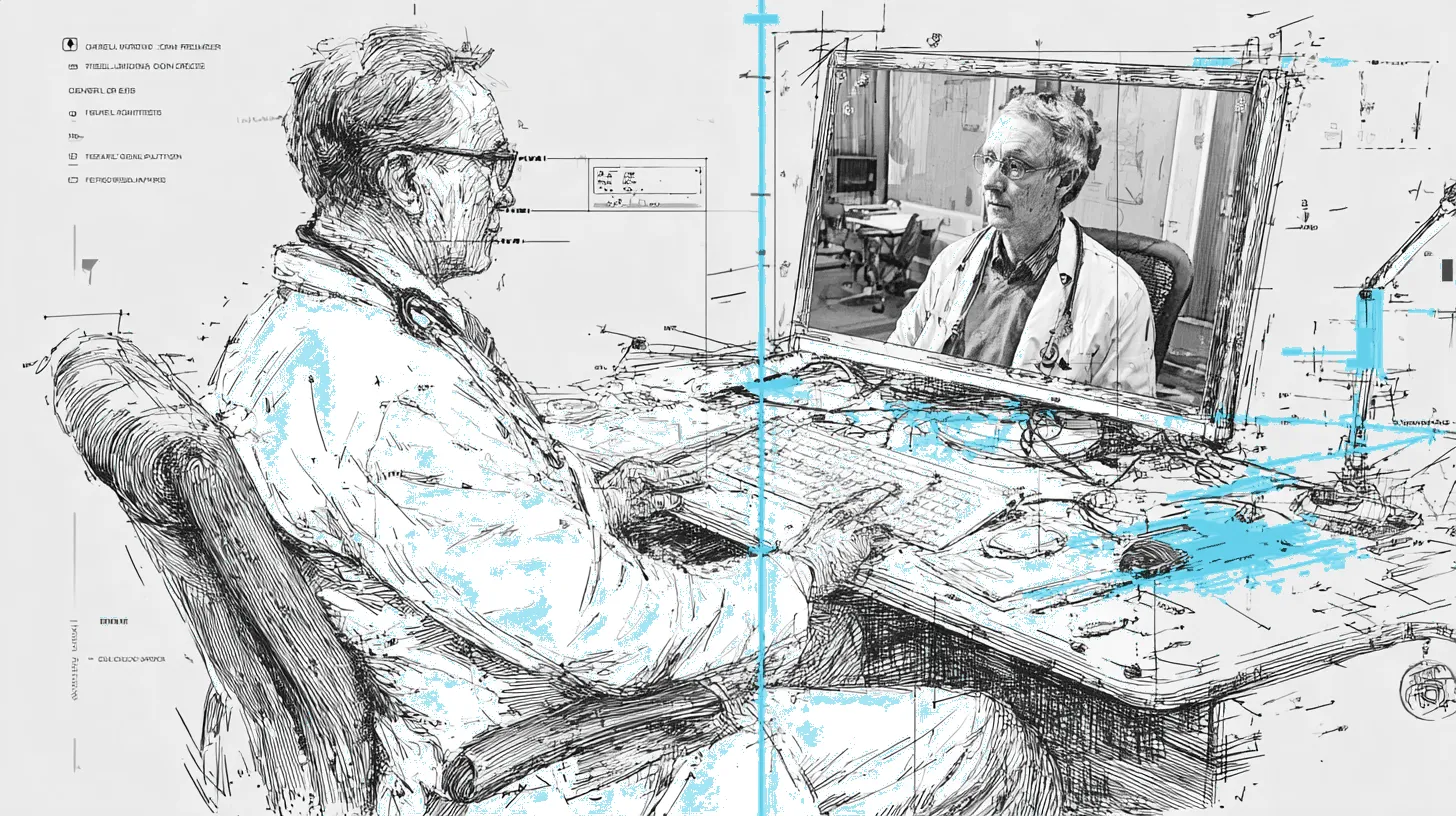
Telehealth went from a convenience to a necessity during the pandemic. It stayed because it works — for patients, providers, and insurers alike. But the same technology that enables a patient to consult a doctor from their living room also enables a fraudster to fabricate consultations that never happened, impersonate patients who never needed treatment, or impersonate providers who never practiced medicine.
This isn’t speculative. The capabilities are here. Real-time deepfake technology — demonstrated in the Hong Kong case where a company’s CFO and colleagues were impersonated on a single video call — applies directly to telehealth.
The Telehealth Fraud Landscape
Scale of Telehealth
Telehealth use remains well above pre-pandemic levels across Medicare, Medicaid, and commercial insurance, and some health plans steer members to virtual care first for routine and follow-up consultations.
This creates a large digital surface area for fraud:
- Millions of telehealth consultations per year across major insurers
- Video, audio, and text-based consultations — all digital, all recordable, all manipulable
- Remote environment means no physical verification of patient identity or condition
- Automated billing tied to consultation records
The Health Insurance Fraud Baseline
The US National Health Care Anti-Fraud Association (NHCAA) estimates that healthcare fraud costs the US tens of billions of dollars a year. Enforcement shows the scale: the US Department of Justice’s 2026 National Health Care Fraud Takedown charged 455 defendants in schemes involving more than US$6.5 billion in alleged fraud, including telemedicine schemes. AARP and the Senior Medicare Patrol put Medicare’s losses to fraud, errors, and abuse at an estimated US$60 billion a year.
Telehealth adds new fraud vectors on top of this existing baseline — not replacing traditional fraud but expanding the attack surface.
How Deepfakes Enable Telehealth Fraud
Scenario 1: Phantom Consultations
The fraud: A provider (or someone impersonating a provider) claims to have conducted telehealth consultations that never occurred, billing the insurer for each one.
How deepfakes help: AI-generated consultation recordings — video of a fabricated patient interaction, or audio of a simulated conversation — serve as “evidence” that the consultation occurred. If the insurer audits the claim, the recording exists as supporting documentation.
Current capability: Video generation tools can produce short clips of realistic conversations. Voice cloning can generate both sides of a dialog. Combined, they produce a fabricated consultation recording that could pass a cursory audit.
Scenario 2: Patient Impersonation
The fraud: Someone impersonates an insured patient during a telehealth consultation to obtain prescriptions, referrals, or diagnostic services under the patient’s insurance coverage.
How deepfakes help: Real-time face-swapping technology allows the fraudster to appear as the patient during a live video consultation. The provider sees what appears to be their patient and proceeds normally.
Current capability: Real-time face-swapping is widely available. Consumer tools can run face-swaps during video calls with minimal latency. Combined with voice cloning — University of Waterloo researchers showed in 2023 that voice authentication could be bypassed with up to a 99% success rate after six attempts — multi-modal impersonation is feasible.
Scenario 3: Provider Impersonation
The fraud: Someone impersonates a licensed medical provider to conduct consultations and bill the insurer. The “provider” may have no medical qualification, or may be practicing without a license in the relevant jurisdiction.
How deepfakes help: The fraudster uses deepfake technology to appear as a registered provider during video consultations with real patients. Patients receive consultations from someone they believe is a qualified doctor.
Insurance impact: The insurer pays for consultations conducted by unqualified individuals. Beyond the financial loss, there’s a patient safety dimension — medical advice from unqualified persons creates liability exposure for the insurer and the platform.
Scenario 4: Upcoded Consultations
The fraud: A real consultation occurs, but the provider bills for a more complex (and expensive) service than was delivered. The telehealth recording is manipulated to support the higher billing code.
How deepfakes help: AI editing tools can modify a consultation recording to add symptoms, discussions, or examinations that didn’t occur — supporting the higher billing code if the claim is audited.
Current capability: Video editing with AI inpainting can alter specific segments of a recording. Audio manipulation can add or modify dialog.
Scenario 5: Fabricated Supporting Evidence
The fraud: Claims for treatment that was never needed, supported by fabricated evidence generated around a “telehealth consultation.”
How deepfakes help: AI-generated photos of conditions, fabricated referral letters, and synthetic test results support the fraudulent diagnosis. Combined with a fabricated or manipulated consultation recording, the entire evidence chain — from consultation to diagnosis to treatment — can be synthetic.
Current capability: AI image and text generation can produce medical-looking photos and documents that appear plausible to non-specialist reviewers — which is enough to get through many claims audits.
Why Telehealth Fraud Is Hard to Detect
The Verification Gap
In-person consultations provide natural verification:
- Physical presence confirms the patient’s identity
- Direct observation confirms the patient’s condition
- The provider’s credentials are verifiable at their practice location
- Medical equipment produces results that are harder to fabricate
Telehealth removes all of these:
- Identity verification is often limited to name and date of birth
- The patient’s condition is observed through a camera — a manipulable medium
- The provider’s identity relies on platform credentials, not physical presence
- All evidence is digital — captured, transmitted, and stored in formats that can be manipulated
Scale and Volume
Insurers process millions of telehealth claims. Manual review of consultation recordings is impractical at scale. Audit sampling catches a tiny fraction of claims. The economics of audit mean that most telehealth claims are paid without the recording ever being reviewed.
Jurisdictional Complexity
Telehealth crosses jurisdictions — a patient in one state consulting a provider in another. Verification of provider credentials, scope of practice, and billing legitimacy across jurisdictions adds complexity that creates audit gaps.
Detection Approaches
At the Platform Level
Telehealth platforms can implement detection at the point of consultation:
Live deepfake detection. During the video call, analyze the video and audio for deepfake indicators — face-swap artifacts, temporal inconsistencies, and synthetic speech.
Device attestation. Verify that the video feed comes from a genuine camera on a genuine device, not from a virtual camera or media injection tool. This addresses injection attacks where synthetic video is fed directly into the video pipeline.
Behavioral signals. Analyze interaction patterns — typing rhythm, mouse movement, scrolling behavior — during the session to check that the participant is consistent with the registered patient.
At the Claims Level
Insurers can implement detection at the point of claims processing:
Recording analysis. When consultation recordings are submitted or audited, analyze them for manipulation indicators — spliced audio, inserted video segments, inconsistent lighting or backgrounds.
Cross-claim pattern analysis. Identify patterns across claims — the same “patient” appearing in an unusual number of telehealth consultations, the same “provider” billing across an implausible number of patients, or recordings that look suspiciously alike.
Metadata verification. Verify that consultation metadata (timestamps, duration, connection quality metrics) is consistent with a genuine telehealth session and matches the billing codes submitted.
Document verification. Check supporting documentation (prescriptions, referrals, diagnostic reports) for signs of fabrication or editing.
Provider Verification
Credential cross-referencing. Verify that the provider appearing in the consultation matches the registered provider for the claimed service, using the platform’s identity verification.
Practice pattern analysis. Identify providers with billing patterns that deviate significantly from peers in the same specialty and geography.
What Health Insurers Should Do
Immediate Actions
-
Audit your telehealth claims pipeline. Understand what proportion of claims involve telehealth, what evidence is submitted, and what verification occurs at each stage.
-
Require platform-level identity verification. Work with telehealth platform partners to ensure patient and provider identity is verified at the start of each consultation — not just at platform registration.
-
Implement random recording audits. Even without AI detection, reviewing a sample of consultation recordings deters fraud by establishing that recordings are reviewed.
Medium-Term Investments
-
Deploy AI detection on consultation recordings. Analyze recordings for manipulation indicators as part of the claims audit process.
-
Connect detection with billing review. Correlate detection findings with billing patterns to identify providers or patients with both manipulation indicators and unusual billing.
-
Establish telehealth-specific fraud indicators. Traditional fraud triggers (timing, value, history) need telehealth-specific additions: consultation frequency, provider diversity, geographic patterns, and recording characteristics.
Related Reading
- Health Insurance Fraud and AI: Detecting Synthetic Medical Evidence
- Voice Cloning Detection in Insurance: Protecting Call Centers and Claims
- AI-Generated Medical Records in Insurance Claims: Detection Strategies
deetech™ analyzes consultation recordings, photos, and documents submitted with health claims for synthetic or manipulated-media indicators, and live meeting detection on Zoom, Microsoft Teams and Google Meet is available on Enterprise plans. Findings support human review; they don’t verify a patient’s or provider’s identity. Request a demo to see how it fits your claims and SIU teams.
Sources cited in this article: