The Rising Threat of Deepfake Car Insurance Fraud
How deepfakes are being used in auto insurance fraud — from fabricated accident photos to manipulated dashcam footage. Detection strategies for insurers.
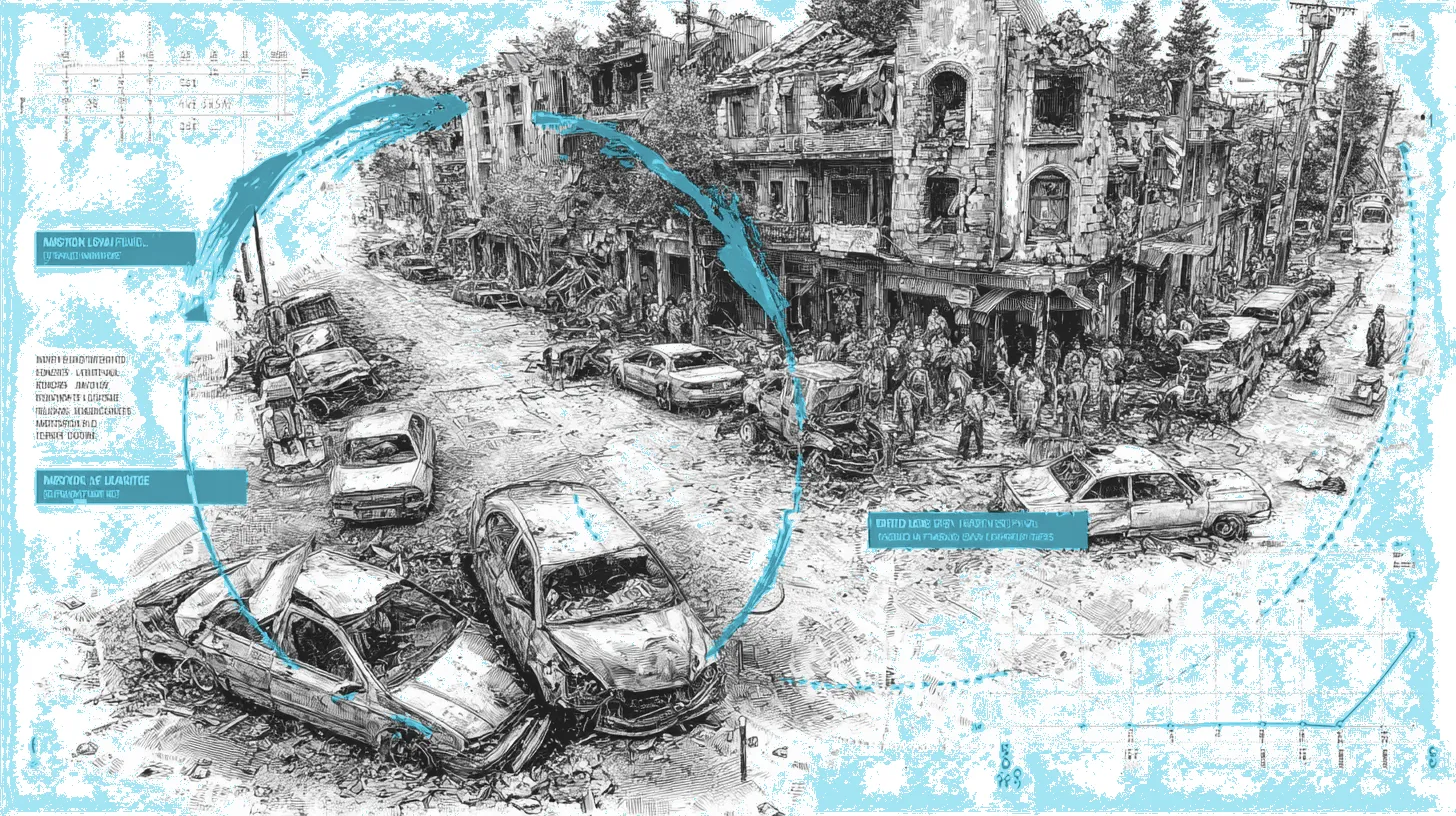
Auto insurance has always been a prime target for fraud. Staged collisions, exaggerated damage claims, and phantom vehicles have been part of the industry landscape for decades. But generative AI is changing the economics of fraud in ways that should concern every insurer, SIU director, and claims manager.
The tools to create convincing fake images and videos are now freely available, require no technical expertise, and produce results in seconds. For auto insurance fraud, this means the barrier to fabricating evidence — once a significant deterrent — has effectively collapsed.
How Deepfakes Are Used in Auto Insurance Fraud
Fabricated Damage Photos
The most straightforward application is generating images of vehicle damage that never occurred. Modern image generation models can produce photorealistic depictions of collision damage, hail damage, vandalism, or weather-related losses. A fraudster can generate multiple angles of a “damaged” vehicle, complete with consistent lighting and realistic detail, without ever denting a panel.
This is more sophisticated than the old approach of inflicting real damage to a cheap vehicle. AI-generated damage leaves no physical evidence to verify during an inspection — because there is no physical vehicle to inspect if the claim is handled entirely digitally.
Manipulated Genuine Photos
More subtle than outright fabrication is the manipulation of genuine photos. A real minor fender bender can be digitally transformed into a catastrophic collision. Scratches become deep structural damage. Small dents become crushed panels. A repairable vehicle becomes a total loss.
This approach is particularly dangerous because the base image is genuine — the vehicle exists, the location is real, the metadata checks out. Only the extent of the damage has been artificially inflated, making detection significantly harder.
Recycled and Repurposed Imagery
Before generative AI, one of the most common digital fraud tactics was submitting damage photos from a previous legitimate claim — either the fraudster’s own or images sourced from the internet. AI tools now make it trivial to modify these recycled images just enough to defeat simple reverse image searches: adjusting colors, changing the background, mirroring the image, or altering minor details while preserving the core damage depiction.
Manipulated Dashcam and Surveillance Footage
As dashcams become ubiquitous and insurers increasingly accept video evidence, video manipulation becomes a natural target. Deepfake technology can alter dashcam footage to change the sequence of events — making the other driver appear at fault, adding vehicles that weren’t present, or modifying timestamps to align with a fabricated narrative.
Video deepfakes are currently harder to produce convincingly than image deepfakes, but the technology is advancing rapidly. Frame-by-frame consistency, realistic motion, and temporal coherence are all improving with each generation of AI models.
Synthetic Supporting Documents
A convincing fraud claim needs more than just photos. Police reports, repair estimates, medical records, and witness statements may all be fabricated using AI. Large language models can generate plausible-sounding documents, while image generation tools can produce realistic letterheads, stamps, and signatures.
When combined with fabricated damage photos, synthetic documents create a comprehensive, internally consistent claim package that is far more difficult to challenge than any single piece of forged evidence.
Why Auto Insurance Is Particularly Vulnerable
Several characteristics of the auto insurance claims process make it especially susceptible to deepfake fraud.
Volume. Auto insurers process enormous volumes of claims. The average large auto insurer handles hundreds of thousands of claims annually. High volume means individual claims receive limited review time, and automated processing pipelines may accept digital evidence without manual verification.
Digital-first claims. The industry has invested heavily in digital claims submission — mobile apps, online portals, photo-based damage assessment. These channels were designed for customer convenience, not adversarial conditions. They accept uploaded images and videos with minimal verification of provenance or authenticity.
Remote assessment. The COVID-19 pandemic accelerated the shift to remote claims handling, with many insurers now offering “virtual inspections” where claimants submit photos in lieu of in-person appraisals. While efficient, this removes the physical verification step that once served as a natural fraud deterrent.
Repair cost inflation. Even when the underlying incident is real, manipulated photos can inflate repair estimates. The difference between a repairable vehicle and a total loss can be tens of thousands of dollars — a strong financial incentive for manipulation.
Real-World Indicators of the Threat
While specific cases of deepfake auto insurance fraud are rarely publicized (insurers understandably prefer not to advertise their vulnerabilities), the broader trend is unmistakable.
The Coalition Against Insurance Fraud estimates that insurance fraud costs American consumers at least US$308.6 billion annually, and that fraud occurs in about 10% of property-casualty losses — a category that includes auto.
Sumsub’s 2024 Identity Fraud Report found that the global identity fraud rate it observed more than doubled between 2021 and 2024, from 1.10% to 2.50%, and named AI-driven attacks, particularly deepfakes, as one of the main fraud trends.
Pindrop’s 2025 Voice Intelligence and Security Report found that deepfake fraud attempts rose more than 1,300% in 2024 — with synthetic-voice attacks on insurance companies up 475%. AI-powered fraud has already reached industrial scale in adjacent financial services.
The progression from financial services fraud to insurance claims fraud is a matter of when, not if. The same tools used to impersonate a CFO on a video call (as in the Hong Kong case reported by CNN in February 2024, where deepfakes were used to steal US$25.6 million) can be used to fabricate a convincing auto damage claim.
Detection Strategies
Metadata Forensics
Every digital photo carries metadata — camera model, creation timestamp, GPS coordinates, software used. Genuine claim photos taken by a smartphone should have consistent EXIF data matching the claimed device and location. AI-generated images either lack this metadata entirely or contain inconsistencies.
Key checks:
- Does the camera model match a real consumer device?
- Do the GPS coordinates (if present) correspond to the claimed incident location?
- Does the creation timestamp align with the reported incident date?
- Is there evidence of editing software in the metadata?
Reverse Image and Pattern Analysis
Search submitted images against databases of known claims photos, stock imagery, and web-indexed content. Look for:
- Exact or near-exact matches indicating recycled imagery
- The same vehicle appearing in claims from different policyholders
- Images that match publicly available stock or tutorial photos of vehicle damage
AI-Powered Detection
Purpose-built deepfake detection tools analyze images at the pixel level to identify statistical signatures of AI generation or manipulation. These tools can detect:
- GAN artifacts — Generative Adversarial Networks leave characteristic patterns in the frequency domain of images they produce
- Diffusion model signatures — Newer diffusion-based generators (Stable Diffusion, DALL-E, Midjourney) have their own detectable patterns
- Manipulation boundaries — Where an edited region meets the original image, forensic analysis can detect discontinuities invisible to the human eye
- Physical implausibility — Reviewers, and some research systems, check whether depicted damage is physically consistent (e.g., whether crumple patterns match the claimed collision type)
At deetech™, the product is designed to accept the compressed, poorly lit media common in real claims workflows. Image, video and document benchmarks are available under NDA, and we encourage insurers to test on their own representative claims media.
Contextual Cross-Referencing
No single detection method is foolproof. Layer technological detection with contextual verification:
- Weather validation — If the claim involves weather-related damage, cross-reference with Bureau of Meteorology or NOAA records for the claimed date and location
- Repair shop analysis — Flag claims that consistently route to the same repair shops, particularly if those shops also provide the damage documentation
- Claims velocity — Monitor for policyholders or vehicles with unusually frequent claims
- Network analysis — Map relationships between claimants, repair shops, medical providers, and legal representatives to identify organized fraud rings
What Insurers Should Do Now
Short Term
- Audit your digital claims intake. Understand exactly what verification (if any) is performed on submitted photos and videos before they enter the assessment pipeline.
- Train claims staff. Ensure adjusters know what deepfake manipulation looks like and when to escalate suspicious media to specialist teams.
- Implement metadata verification. At minimum, strip and analyze EXIF data on all submitted imagery. Flag images with missing, inconsistent, or suspicious metadata for manual review.
Medium Term
- Deploy AI detection tools. Integrate deepfake detection into your claims workflow — ideally at the point of submission, before the claim enters the assessment queue.
- Establish forensic evidence standards. Define what constitutes adequate documentation for claims involving potentially manipulated media, including chain-of-custody requirements for digital evidence.
- Share intelligence. Participate in industry fraud databases and share patterns with bodies like the NICB, IFB, or ICA.
Long Term
- Shift to verified capture. Explore requiring claims photos to be taken through your own mobile app with tamper-evident capture (cryptographic hashing at the point of image creation, live capture verification, and device attestation).
- Build fraud detection into underwriting. Use claims fraud patterns to inform underwriting risk models, pricing synthetic fraud risk into premiums where warranted.
The Arms Race
Deepfake technology will continue to improve. Today’s detectable artifacts will be smoothed out in tomorrow’s models. The insurance industry cannot afford to treat this as a static problem with a one-time technology fix.
What’s needed is a continuous, layered defense: combining human expertise, metadata forensics, AI detection, and contextual analysis into an adaptive system that evolves alongside the threat.
The insurers who build these capabilities now will be positioned to manage the risk. Those who wait until deepfake fraud is widespread will be paying for it — literally — in fraudulent claims.
Related Reading
deetech™ is built around claims workflows and designed to accept the compressed, varied media that real claims produce. Request a demo to see how insurers and claims teams screen auto claims evidence for manipulation.
Sources cited in this article: