Post-Disaster Insurance Fraud: How AI-Generated Evidence Exploits Catastrophe Events
How AI-generated photos and documents exploit disaster claims, what past catastrophes in the US and Australia teach, and the evidence checks that work.
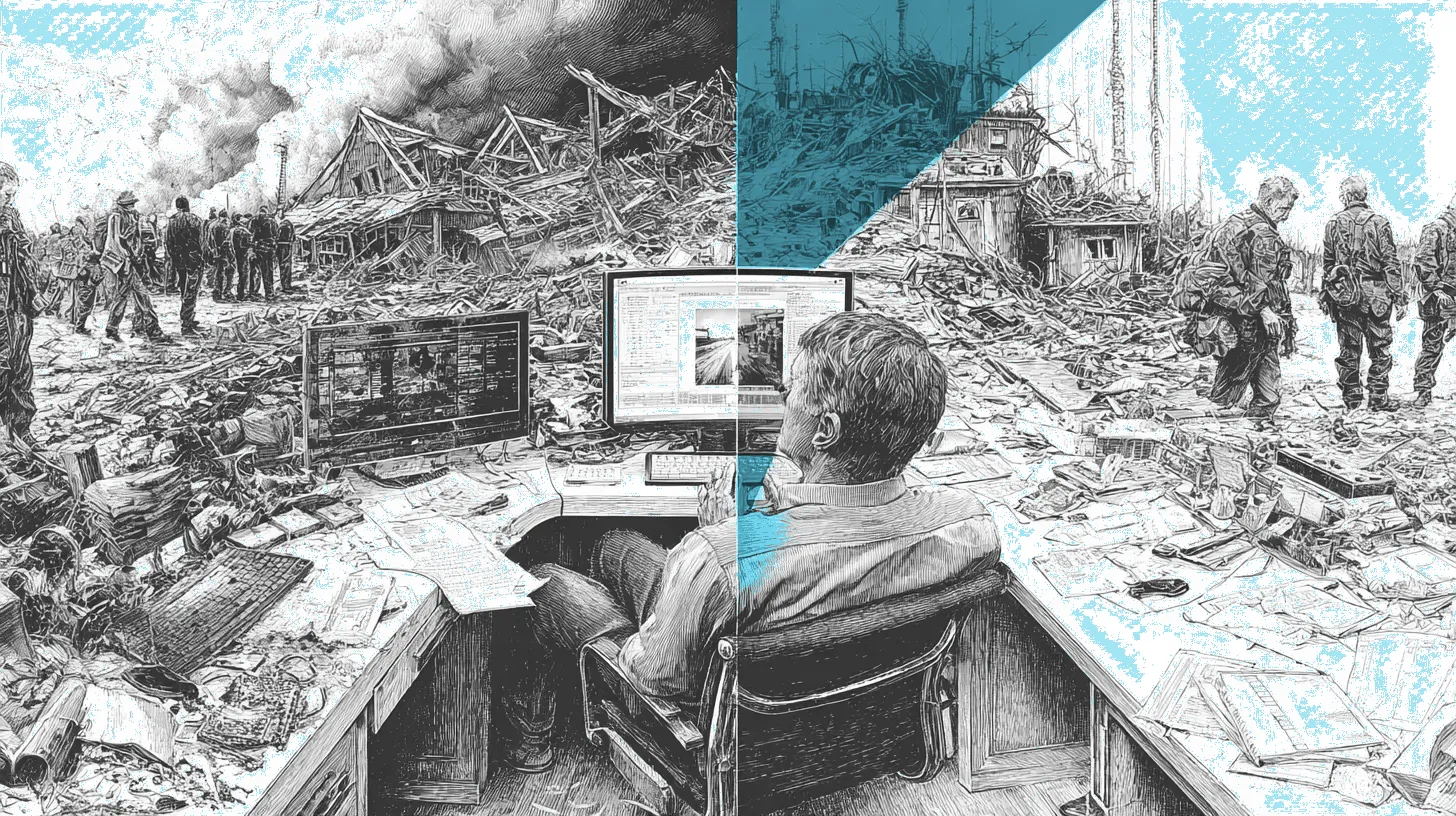
When ex-Tropical Cyclone Alfred hit South East Queensland and northern New South Wales in March 2025, insurers ultimately received about 132,000 claims. The 2022 floods in the same region generated about 246,000. The 2019–2020 Black Summer bushfires produced about 38,000. Hurricane Ian in Florida led to roughly 777,000 claims reported to the state’s insurance regulator.
These numbers represent legitimate suffering — homes destroyed, livelihoods disrupted, communities shattered. They also represent an enormous opportunity for fraud.
Catastrophe events have always attracted opportunistic and organized insurance fraud. What’s changed is the technology available to fraudsters. AI-generated evidence — synthetic photographs, fabricated documents, cloned voices — transforms post-disaster fraud from a craft requiring physical staging to a digital operation executable from anywhere in the world.
This article focuses on the evidence: how AI-generated photos and documents are built for disaster claims, what earlier catastrophes in the US and Australia teach, and which checks hold up. For the broader overview of catastrophe fraud, see catastrophe event fraud; for the analytics used to spot coordinated campaigns in a surge, see claims surge analysis.
Why Disasters Are Perfect for Fraud
Natural disasters create a convergence of conditions that favor fraudulent claims.
Volume overwhelms scrutiny
During a catastrophe event, claim volumes can spike to many times normal levels, and adjusters’ caseloads rise with them. Triage becomes triage in the truest sense — prioritizing the most severe cases and fast-tracking everything else.
This volume creates cover. A fraudulent claim submitted among thousands of legitimate ones receives less scrutiny by default. Insurers face immense pressure — from regulators, media, and policyholders — to process claims quickly. In Australia, the General Insurance Code of Practice sets a four-month timeframe for claim decisions, which can extend to up to 12 months for claims from an Extraordinary Catastrophe or where fraud is suspected — and every delay is visible to policyholders, media and regulators. Speed and thoroughness become competing priorities.
Verification is physically impossible
After a major flood, bushfire, or cyclone, affected areas may be inaccessible for days or weeks. Physical inspections are delayed. Independent assessments are backlogged. Satellite imagery may not be immediately available or may be obscured by cloud cover.
Fraudsters exploit this verification gap. Claims submitted with photographic evidence during the period when physical inspection is impossible are assessed primarily on the basis of that evidence. If the photos look convincing, the claim progresses.
Emotional and political pressure
Catastrophe events generate public sympathy and political attention. Insurers seen as slow or obstructive face media criticism, regulatory scrutiny, and reputational damage. This creates an institutional bias toward faster processing and more generous assessment — exactly the environment where fraud thrives.
The National Insurance Crime Bureau (NICB), which estimates that fraud accounts for roughly 5–10% of insurance claims, warned after Hurricane Ian that fraud could account for US$3–6 billion of the claims submitted.
Geographic concentration enables coordination
Disasters affect defined geographic areas. Every property in the affected zone is a plausible claim. Fraud rings can submit claims for addresses within the disaster footprint, knowing that damage to properties in that area is expected and credible.
This geographic concentration also means that cross-claim analysis — normally an effective fraud detection technique — is complicated by the genuine correlation between claims. Hundreds of legitimate claims from the same neighborhood aren’t suspicious after a flood. Distinguishing legitimate correlation from fraudulent coordination requires more sophisticated analysis.
How AI-Generated Evidence Changes the Game
Traditional post-disaster fraud required physical effort. Staging damage, manipulating actual property, or at minimum, photographing someone else’s damaged property and claiming it as your own. Each approach carried risk of detection and required physical proximity to the disaster zone.
AI-generated evidence eliminates these constraints.
Synthetic damage photographs
A fraudster can generate convincing property damage photographs without being anywhere near the affected area. The process exploits readily available tools:
- Acquire a base image: Photograph the target property (or find it on Google Street View, real estate listings, or council records) in its undamaged state.
- Generate damage: Use image generation AI to add flood damage, fire damage, storm damage, or structural collapse. Inpainting workflows in Stable Diffusion or similar tools can selectively add water lines, debris, broken windows, collapsed roofing, or fire scarring.
- Match the disaster type: The generated damage must be consistent with the specific catastrophe. Flood claims show water damage and mud lines. Cyclone claims show wind damage and structural failure. Bushfire claims show fire scarring and smoke damage. AI tools are flexible enough to generate any damage type.
- Process for authenticity: Strip AI generation metadata, inject plausible EXIF data (device, GPS, timestamp), apply compression consistent with smartphone cameras, and adjust lighting to match the time of day and weather conditions of the disaster period.
The result: a set of photographs showing damage that never occurred, to a property that may be hundreds of kilometers from the disaster zone, submitted with metadata consistent with being taken on-site during the event.
For a detailed technical analysis of how these images differ from genuine photographs at the forensic level, see our technical breakdown of AI-generated property damage photos.
Fabricated supporting documentation
Damage photographs are just one element. A complete claim typically requires supporting documentation: repair quotes from contractors, receipts for damaged items, statutory declarations, expert assessments. AI tools — particularly large language models — can generate plausible versions of all of these.
A fabricated repair quote includes realistic line items, market-rate pricing, and formatting consistent with legitimate trade documentation. Generated receipts include appropriate GST calculations, realistic product descriptions, and vendor details that may reference real businesses. Statutory declarations follow correct legal formatting with plausible narrative content.
Scaled submission
The most significant change AI introduces is scale. Traditional fraud required individual effort for each claim. AI-generated evidence can be produced in bulk. A fraud ring with access to policyholder data (available through data breaches) and image generation tools can submit dozens or hundreds of fraudulent claims following a single disaster event.
Each claim uses uniquely generated images — no two are identical, defeating simple duplicate detection. Each claim uses different evidence, different damage descriptions, and different claimed amounts (kept below fast-track thresholds). The operation is industrial, not artisanal.
Historical Patterns: What We’ve Already Seen
Post-disaster fraud is not new. The AI-generation component is. Understanding historical patterns reveals the templates that AI now supercharges.
Hurricane Katrina (2005)
The Justice Department set up a Hurricane Katrina Fraud Task Force to prosecute disaster-related fraud, and it charged hundreds of people. Common schemes included claims for properties that weren’t in the affected area, claims for damage that predated the hurricane, inflated damage estimates, and assistance claims from people who hadn’t been displaced.
The Government Accountability Office estimated that US$600 million to US$1.4 billion of FEMA’s individual assistance payments after Hurricanes Katrina and Rita — out of more than US$6 billion paid through February 2006 — were improper or potentially fraudulent. Much of that fraud was ultimately exposed by cross-referencing claims against property records, identity data and physical inspection — verification methods that are slower and less reliable when the evidence itself is AI-generated.
Australian Black Summer Bushfires (2019–2020)
The Insurance Council of Australia reported about 38,000 claims and approximately A$2.3 billion in insured losses. Fraud figures for this event haven’t been publicly broken down. But the claim types that post-disaster fraud typically exploits are all present in a fire event: damage claims for properties outside the fire perimeter, inflated contents claims, and pre-existing damage attributed to the fires.
Hurricane Ian (2022)
Ian made landfall in southwest Florida in September 2022 and produced roughly 777,000 claims and about US$21 billion in estimated insured losses, according to data insurers filed with the Florida Office of Insurance Regulation. NICB warned in the storm’s aftermath that fraud and contractor scams could add billions to that bill. Florida had already been fighting contractor-driven assignment-of-benefits (AOB) litigation abuse, and in December 2022 lawmakers eliminated AOB for new residential property policies.
The emerging AI-enabled pattern
These historical examples relied on physical staging, document forgery, and human deception. Each was ultimately detectable through physical verification. AI-generated evidence introduces a new category: claims supported by evidence that looks genuine, carries plausible metadata, and cannot be debunked by simply visiting the property (because physical inspection may be delayed weeks post-disaster).
Evidence Checks That Hold Up
Two layers work together. Per-file forensic analysis examines each photo and document for signs of generation or manipulation. Portfolio-level correlation, run in the insurer’s own analytics, looks for patterns across the full population of submitted claims — which matters most against coordinated fraud.
Image similarity analysis
Even when AI generates unique images for each claim, patterns can emerge. Images produced with the same model, settings or prompts often share stylistic characteristics — lighting, texture rendering, damage morphology and color distributions.
Image-similarity analysis can surface clusters of damage photos that look different to the human eye but are unusually close at the feature level. A cluster is a lead for investigation, not a finding of fraud: legitimate photos of the same street after the same flood will also look alike.
Geographic and temporal patterns
Legitimate post-disaster claims follow geographic patterns that correlate with the actual disaster footprint, severity mapping, and infrastructure data. Flood claims concentrate along waterways and in low-lying areas. Wind damage claims correlate with measured wind speeds. Fire claims follow the actual burn perimeter.
Fraudulent claims may not follow these patterns precisely. A claim for severe flood damage at a property on high ground, or for wind damage in an area where recorded wind speeds were below damaging thresholds, warrants scrutiny. Cross-referencing claim locations with Bureau of Meteorology data, satellite imagery, and emergency services records reveals geographic inconsistencies.
Temporal patterns also matter. Legitimate claims are typically lodged within days of the event. Fraudulent claims may arrive later — after the fraudster has had time to assess the disaster parameters and generate appropriate evidence. A spike in claims two weeks after the event, when legitimate lodgment has already peaked, warrants a closer look — although evacuation and restricted access can also delay genuine claims.
For the technical approach to these correlations — temporal, geographic, metadata, financial and network signals — see claims surge analysis.
Financial pattern analysis
Fraud rings often exhibit financial patterns that distinguish them from organic claims. Claims just below fast-track thresholds cluster unnaturally when submitted by coordinated groups. Payment destinations may share banking characteristics even when policyholder identities differ. Claimed amounts may show unusual consistency — real damage costs vary continuously, while fabricated claims can drift toward round numbers and threshold-optimized figures.
Network analysis
Linking claims through shared attributes — phone numbers, email addresses, IP addresses used for online submission, bank accounts, nominated repairers — can reveal network structures invisible in individual claim analysis. A fraud ring submitting 50 claims through 50 different policyholders may share a single bank account, a single email domain, or a single claims preparation service.
What Insurers Should Do Now
The intersection of AI-generated evidence and catastrophe events requires preparation before the next disaster, not reaction during it.
Pre-disaster preparation
Deploy automated deepfake detection on media uploads. Photographs, videos and documents submitted through digital channels should be screened automatically as they arrive. This must be in place before a catastrophe event — deploying during a surge is too late. Detection must operate at scale and speed compatible with surge volumes.
Establish baseline property data. Pre-event imagery from satellite providers (Nearmap, EagleView), council records, and real estate databases provides a comparison point for assessing claimed damage. If the insurer has a pre-event image of the property, AI-generated “damage” photos can be compared against the actual pre-event condition.
Plan capacity for surge analysis. Your analytics and detection pipeline must cope with surge volumes. Agree throughput, batching and queuing with your providers before the season, so correlation work doesn’t fall into a backlog.
Train adjusters on AI-generated evidence indicators. While automated detection is the primary screen, human adjusters should understand the basic indicators of synthetic media — unusual consistency in damage patterns, lighting that doesn’t match weather conditions, impossible structural damage morphology, and metadata inconsistencies.
During-disaster response
Activate heightened screening protocols. When a catastrophe event is declared, detection thresholds should tighten. Claims that would normally pass automated screening with a low-suspicion score should receive enhanced review during surge periods.
Implement geographic verification. Cross-reference claimed property locations against official disaster declarations, severity mapping, and infrastructure damage assessments as they become available.
Monitor submission patterns in real time. Dashboard-level visibility into claim submission rates, geographic distribution, and detection flag rates enables rapid identification of coordinated fraud campaigns.
Preserve evidence. Keep original files, detection flags, metadata findings and correlation results, with a record of who handled what and when. Any later prosecution depends on documentation that starts at the point of detection.
Post-disaster analysis
Retrospective batch analysis. Once the immediate surge subsides, conduct comprehensive batch analysis of all claims received during the event. Claims that passed initial screening may reveal patterns visible only in retrospective analysis — particularly cross-claim correlations that require the full dataset.
Fraud intelligence sharing. Industry bodies — the Insurance Council of Australia’s counter-fraud function in Australia, NICB in the US and the Insurance Fraud Bureau in the UK — provide coordination points for sharing fraud intelligence across insurers. Patterns identified by one insurer during a catastrophe event should be shared to protect the industry.
Learn from every event. Confirmed fraudulent claims using AI-generated evidence — and confirmed legitimate claims that were flagged — should inform your rules, thresholds and reviewer training for the next event. The continuous improvement cycle is essential.
Conclusion
Natural disasters will continue to occur. AI-generated evidence will continue to improve. The convergence of these two trends creates an escalating threat to insurance claims integrity.
The defenders’ advantage is data. Individual fraudulent claims may be indistinguishable from legitimate ones. But coordinated fraud, submitted at scale, leaves patterns — in image generation characteristics, geographic distribution, temporal clustering, financial networks, and submission metadata.
Exploiting that advantage requires automated detection deployed before the disaster hits, portfolio analytics that keep up with surge volumes, and continuous improvement driven by every event.
The next major catastrophe will test every insurer’s readiness. The question isn’t whether AI-generated fraud claims will be submitted. It’s whether insurers will detect them before cutting the checks.
deetech™ helps insurers and claims teams screen disaster-claim photos, documents and other supported media for AI generation and manipulation — per file through the API, or in batches of up to 20 files per request (100 on Enterprise), with image-similarity signals across the organization’s own files. Request a demo.
Sources cited in this article:
- Insurance Council of Australia — Extreme weather cost $3.5 billion in 2025
- Insurance Council of Australia — Catastrophe 221: NSW and South East Queensland Floods
- Insurance Council of Australia — General Insurance Code of Practice
- Florida Office of Insurance Regulation — Hurricane Ian
- NICB — Nearly half a million claims have been filed following Hurricane Ian (via PR Newswire)
- GAO-06-844T — Hurricanes Katrina and Rita disaster relief