KYC Deepfake Protection: Securing Identity Verification Against AI Fraud
How deepfakes bypass KYC verification — injection attacks, synthetic identities, and face-swaps — and the detection technology to stop them.
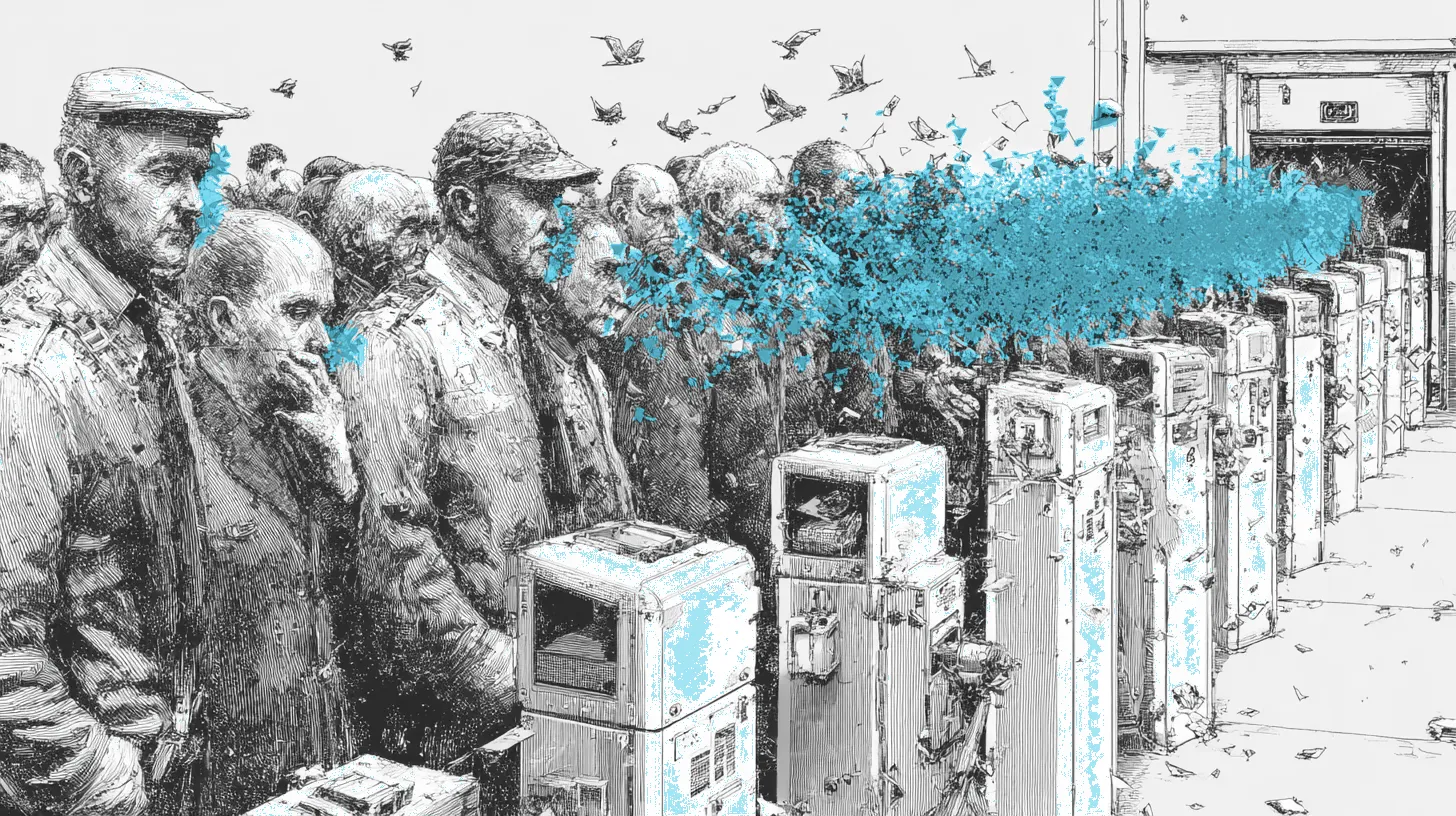
Know Your Customer (KYC) verification is supposed to be the front door to financial services — the process that confirms you are who you claim to be before you can open an account, take out a policy, or initiate a transaction.
Deepfakes are picking the lock.
Regula’s Deepfake Trends 2024 research found that 92% of businesses worldwide experienced identity fraud in the past 12 months, and that financial-services businesses lost an average of over US$600,000 each to deepfakes over the year. The Sumsub 2024 Identity Fraud Report announcement documented a rise in the global average identity-fraud rate from 1.1% of verifications in 2021 to 2.6% in 2024. And Gartner warned in 2024 that injection attacks rose 200% in 2023.
This article explains how deepfakes bypass the standard KYC flow, why current defenses are insufficient, and what a deepfake-resistant KYC system looks like — across banking, insurance, and government. For an insurance-specific playbook, see The Insurer’s Guide to KYC and Deepfake Verification.
How KYC Works (and Where It Breaks)
The Standard KYC Flow
Modern digital KYC typically follows this flow:
- Document capture. The user photographs or uploads an identity document (driver’s license, passport, national ID).
- Document verification. Automated systems verify the document — checking format, security features, and data extraction.
- Selfie capture. The user takes a selfie or short video.
- Face matching. The selfie is compared to the photo on the identity document — do they match?
- Liveness check. The user performs an action (blink, turn head, smile), or a passive check runs, to show they’re a live person, not a photo or recording.
- Decision. If all checks pass, the identity is verified.
Each step has deepfake vulnerabilities.
Attack Vector 1: Synthetic Identity Documents
The attack: The identity document itself is forged using AI tools — generated face photo, fabricated personal details, and replicated security features.
Current capability: AI image generation produces realistic face photos on demand. Document templates traded online provide the layout and security feature positioning. Combined, a convincing-looking identity document can be created in minutes.
Why it works: Document verification systems check for expected layout, security features, and data format. A well-crafted synthetic document can meet these criteria. The face on the document isn’t in any database because it doesn’t correspond to a real person — it’s a synthetic identity, combining a generated face with fabricated personal information.
Attack Vector 2: Face-Swap Selfie
The attack: During the selfie capture step, the attacker uses real-time face-swapping to appear as the person on the (genuine or synthetic) identity document.
Current capability: Real-time face-swap technology runs on consumer hardware. The attacker holds the identity document showing face A, then uses face-swap during the selfie capture to appear as face A. The face matching step succeeds because the selfie matches the document.
Hong Kong police reported in 2024 that on at least 20 occasions, fraudsters had used AI deepfakes to trick facial recognition by imitating the people pictured on stolen identity cards, as part of loan applications and bank account registrations (CNN).
Attack Vector 3: Presentation Attacks
The attack: Instead of a live face, the attacker presents a static image, pre-recorded video, or 3D mask to the camera.
Current defenses: Liveness checks (active prompts or passive analysis) are designed to defeat presentation attacks.
Why it fails with deepfakes: Real-time face-swap can handle many active liveness challenges. The attacker performs the requested action (blinks, turns, smiles) and the face-swap system transposes the target face onto their movements. The check sees a live person — just not the right one.
Attack Vector 4: Injection Attacks
The attack: Instead of pointing a camera at a face (real or fake), the attacker injects a pre-rendered or real-time synthetic video directly into the application’s camera feed — bypassing the physical camera entirely.
How it works: Virtual camera software (OBS, ManyCam, or custom tools), emulators, or hooked camera APIs replace the device’s camera input with a video source. The KYC application receives what it believes is a live camera feed but is actually a pre-recorded or generated video.
Why it’s dangerous: Injection bypasses the physical camera, so defenses built around what’s in front of the lens — screens, printouts, masks — never see an artifact to catch. The injected video can be rendered at any quality, with any face, performing any requested action.
Detection: Injection attacks call for injection attack detection (IAD) — verifying that the video feed comes from a genuine camera on a genuine device, not from software. This combines device attestation, checks for virtual cameras and emulators, and analysis of the video stream itself. Europe’s CEN/TS 18099:2024 is the first technical specification dedicated to biometric data injection attack detection.
We cover injection attacks in detail in our injection attacks article.
Why Current KYC Defenses Fail
Liveness Checks Alone Are Insufficient
Traditional liveness detection asks: “Is there a live person in front of the camera?” With a real-time face-swap, the answer is yes — the attacker is live, performing real actions. A liveness system that only analyzes the final output (a live, responsive face) may not see that the face has been transformed. Liveness has to be paired with deepfake and injection detection.
Document Verification Doesn’t Verify Photos
Document verification checks the document’s structure, format, and data. It doesn’t verify that the photo on the document corresponds to a real person. A synthetic identity with a generated face on a properly formatted document can pass document verification.
Face Matching Matches the Wrong Thing
Face matching confirms that the selfie matches the document photo. If both are deepfakes (or both show the same synthetic face), the match succeeds. Face matching verifies consistency between two inputs — it doesn’t verify that either input is genuine.
The Fundamental Gap
Standard KYC answers: “Do the document and the selfie match each other?”
The question it needs to answer: “Are the document and the selfie both genuine representations of a real person?”
This requires deepfake detection built into the KYC flow.
Deepfake-Resistant KYC
Enhanced KYC Flow
1. Document capture
    │
    ├─→ Document verification (format, security features, data)
    ├─→ Document photo deepfake analysis (is the face on the document genuine or generated?)
    │
2. Selfie/video capture
    │
    ├─→ Device attestation (is this from a real camera on a real device?)
    ├─→ Injection attack detection (is this a live camera feed or software injection?)
    ├─→ Face deepfake analysis (is this face genuine or a face-swap?)
    ├─→ Liveness check (is this person live and responsive?)
    │
3. Matching and decision
    │
    ├─→ Face matching (document photo ↔ selfie)
    ├─→ Combined risk score (all detection results aggregated)
    └─→ Decision: approve / review / reject
Detection Requirements
| Check | What it detects | When it runs |
|---|---|---|
| Document photo analysis | AI-generated face on ID document | Step 1 (document submission) |
| Device attestation | Virtual cameras, emulators | Step 2 (before capture) |
| Injection detection | Pre-rendered or injected video feed | Step 2 (during capture) |
| Face deepfake detection | Real-time face-swap | Step 2 (during capture) |
| Liveness verification | Presentation attacks (photos, masks) | Step 2 (during capture) |
| Face matching | Identity consistency | Step 3 (after all checks) |
Depth of Defense
No single check is sufficient:
- Device attestation catches many injection attacks but not face-swaps
- Face deepfake detection catches face-swaps but may miss presentation attacks
- Liveness catches presentation attacks but not every deepfake
- Document analysis catches synthetic documents but not genuine stolen documents
Combined, these checks create multiple layers that an attacker must evade simultaneously — greatly increasing the difficulty of a successful attack. Gartner’s 2024 guidance makes the same point: preventing deepfake attacks on face biometrics requires a combination of presentation attack detection, injection attack detection, and image inspection.
Industry-Specific KYC Challenges
Banking
Banking KYC is heavily regulated (AML/CTF requirements under AUSTRAC in Australia, FinCEN in the US, the FCA in the UK). Non-compliance carries severe penalties. KYC must balance security with customer experience — excessive friction drives legitimate customers to competitors.
Insurance
Insurance KYC has distinct challenges:
- Policy inception. Identity verification at policy issuance determines who is covered. A synthetic identity that passes KYC can create a policy that later supports a fraudulent claim.
- Claims verification. When a claimant contacts the insurer, identity verification confirms they’re the policyholder. Voice cloning and face-swapping can bypass this verification, allowing someone else to file claims on the policyholder’s account.
- Beneficiary verification. Life insurance and annuity products require verification of beneficiaries. Synthetic or impersonated beneficiaries can redirect payouts.
For insurance-specific KYC challenges, see our insurer’s guide to KYC and deepfake verification.
Government Services
Government KYC (benefits applications, tax filing, citizen services) faces scale challenges — millions of verifications, often using legacy systems. Booz Allen Hamilton’s research describes deepfakes targeting government benefits, including synthetic voices used to redirect veterans’ benefits.
Regulatory Requirements
Australia
AUSTRAC requires reporting entities to verify customer identity as part of AML/CTF compliance. Reformed AML/CTF Rules took effect on March 31, 2026, with a more risk-based approach to customer due diligence. The requirement to maintain effective verification processes implies protection against emerging bypass methods such as deepfakes.
APRA’s CPS 234 requires information security capabilities commensurate with the threat landscape. As deepfake KYC bypass becomes documented, maintaining KYC systems without deepfake detection becomes a potential compliance gap.
United States
FinCEN issued Alert FIN-2024-Alert004 on November 13, 2024, warning financial institutions about fraud schemes that use deepfake media to circumvent identity verification, authentication, and due diligence controls. It lists red-flag indicators and asks institutions to use the key term “FIN-2024-DEEPFAKEFRAUD” in suspicious activity reports.
European Union
The EU AI Act lists remote biometric identification as high-risk, but explicitly excludes biometric verification whose sole purpose is to confirm that a person is who they claim to be — the typical KYC selfie match. KYC teams should still track the Act: its transparency duties for deepfakes and AI interactions (Article 50) have applied since August 2, 2026. Remote onboarding in EU financial services is also shaped by the EBA’s Guidelines on remote customer onboarding, applicable since October 2, 2023.
Measuring KYC Resilience
Red Team Testing
Regularly test your KYC system against deepfake attacks:
- Face-swap testing: Attempt KYC verification using real-time face-swap tools
- Injection testing: Attempt KYC using virtual cameras, emulators, and pre-rendered video
- Synthetic document testing: Submit AI-generated identity documents
- Presentation attack testing: Test with printed photos, screen replays, and masks
Metrics and Standards
Express presentation attack results in ISO/IEC 30107-3 terms: APCER (the share of attacks wrongly accepted) and BPCER (the share of genuine users wrongly rejected). Independent labs such as iBeta test liveness products against this standard, and CEN/TS 18099 covers injection attack detection. Ask vendors for current test letters, not marketing figures.
Illustrative targets — set your own based on your risk appetite and customer base:
| Metric | Illustrative target |
|---|---|
| Presentation attacks wrongly accepted (APCER) | As low as practical; review every miss |
| Face-swap detection rate | Measured on your own red-team set |
| Injection attack detection rate | Measured on your own red-team set |
| Synthetic document detection rate | Measured on your own red-team set |
| Genuine users wrongly rejected (BPCER) | Low enough to protect conversion |
| Average verification time | Under a minute |
deetech™ analyzes supported media for synthetic or manipulated-media indicators. It does not provide biometric identity, face match, voice biometrics, geolocation identity, or KYC liveness decisions; use a separately approved identity provider for those decisions. Request a demo if your team needs to verify the images, video, audio, or documents submitted alongside identity checks.
Sources cited in this article:
- Regula Deepfake Trends 2024
- Sumsub 2024 Identity Fraud Report announcement
- Gartner — Deepfakes and identity verification (February 2024)
- CNN — Hong Kong deepfake fraud (February 2024)
- Federal Reserve — Synthetic Identity Fraud
- AUSTRAC — AML/CTF Regulation
- FinCEN Alert FIN-2024-Alert004
- Booz Allen Hamilton — Deepfakes Targeting Benefits
- EU AI Act — Annex III
- APRA — CPS 234