The Insurer's Guide to KYC and Deepfake Verification
How deepfakes bypass traditional KYC in insurance underwriting and policy issuance. The threat, regulatory implications, and detection strategies for insurers.
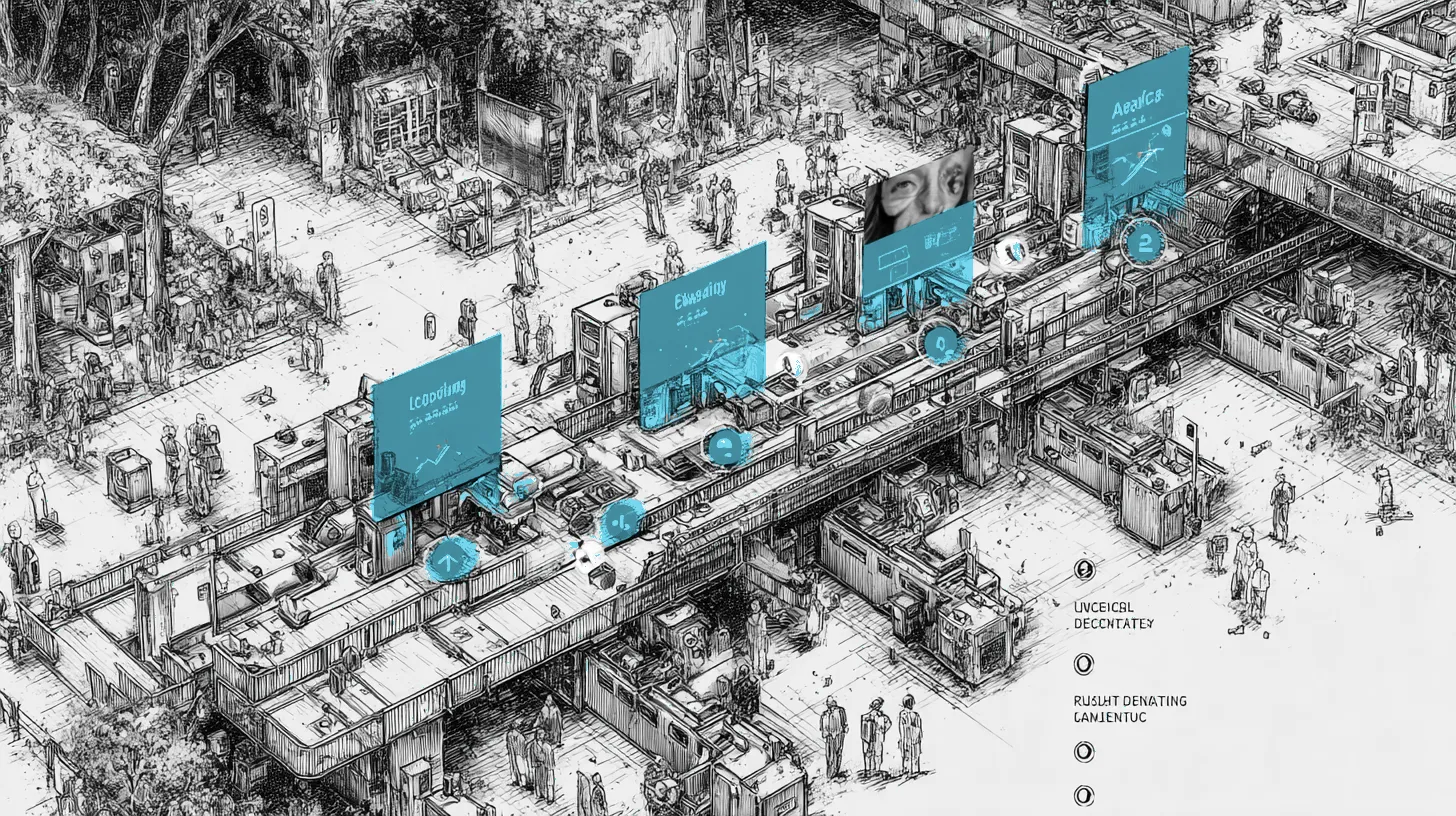
Know Your Customer (KYC) is the insurance industry’s first line of defense against fraud. Verify the identity of the person buying the policy, and you prevent the cascade of downstream fraud that follows from a false identity: fraudulent claims, synthetic identity schemes, premium fraud, and policy procurement fraud.
The problem: deepfakes are defeating KYC processes that were designed before them.
When AI can generate a photorealistic face that matches a fabricated identity document, when voice cloning can pass phone-based verification, and when liveness checks can be fooled by real-time face synthesis — the entire KYC framework needs to be reconsidered.
This guide is written for insurers: where identity checks sit across the policy lifecycle, which regulations apply to insurers specifically, and how to phase in deepfake-resistant verification by product line. For a general explainer on how deepfakes break the standard KYC flow, see KYC Deepfake Protection.
How KYC Works in Insurance
Traditional Identity Verification
Insurance KYC typically involves several layers, depending on the product, jurisdiction, and risk level:
Document verification. The applicant provides identity documents (driver’s license, passport, national ID). The insurer checks the document’s visual authenticity and matches the document photo to the applicant.
Data verification. The applicant’s personal data (name, date of birth, address, SSN/TFN) is checked against databases — credit bureaus, government records, watchlists, and sanctions lists.
Phone or video verification. For higher-risk products (life insurance, high-value policies), the applicant may undergo a phone interview or video identity check to confirm they match their documents.
Liveness detection. Digital onboarding processes may include a liveness check — asking the applicant to take a selfie or short video, which is compared to the identity document photo. Basic liveness checks ask the user to blink, turn their head, or smile to prove they’re a live person rather than a static photo.
Where KYC Happens
- At policy application — verifying the applicant is who they claim to be
- At policy changes — verifying the policyholder when changing coverage, beneficiaries, or payment details
- At claims filing — verifying the claimant’s identity before processing payouts
- At periodic review — re-verifying identity for long-duration products (life, annuities)
How Deepfakes Defeat KYC
Fabricated Identity Documents
AI image generation creates photorealistic identity documents featuring generated faces — people who don’t exist. These documents can include correct formatting, security feature approximations, and the visual elements an identity checker looks for.
A 2019 Federal Reserve white paper cited estimates that synthetic identity fraud was the fastest-growing type of financial crime in the US and cost US lenders US$6 billion in 2016. AI-generated photos and documents now make these synthetic identities easier to build.
Selfie and Photo Match Bypass
When the verification process asks the applicant to provide a selfie matching their ID photo, a deepfake face generated to match the fabricated document defeats the comparison. The AI-generated face on the document and the AI-generated selfie are consistent — because they were both produced from the same source.
Liveness Check Defeat
Basic liveness checks (blink, turn head, smile) can be defeated by real-time face synthesis tools that generate responsive deepfake video. The applicant holds a phone to their face, but the camera feed is intercepted and replaced with a synthetic face that responds to the liveness prompts.
Hong Kong police reported in early 2024 that fraudsters had used AI deepfakes on at least 20 occasions to trick facial recognition by imitating the people pictured on stolen identity cards (CNN) — evidence that this attack is already operational, not theoretical.
Voice Verification Bypass
For phone-based verification, voice cloning replicates the vocal characteristics that voice biometric systems use for authentication. Pindrop’s 2025 Voice Intelligence and Security Report found that synthetic-voice attacks on insurance rose 475%.
Knowledge-Based Authentication Failure
Knowledge-based authentication (KBA) — verifying identity through questions only the real person should know — is already widely compromised through data breaches. AI makes it worse: large language models can synthesize plausible answers to KBA questions from publicly available data about the target.
The Regulatory Context
Anti-Money Laundering (AML) and KYC Requirements
Insurance KYC requirements derive from several regulatory frameworks:
US — Bank Secrecy Act / FinCEN. Insurance companies that issue covered products (permanent life insurance, annuities, and other products with cash value or investment features) must maintain an AML program and report suspicious activity under 31 CFR 1025. The formal Customer Identification Program rule applies to banks and broker-dealers rather than insurers, but an insurer’s AML program must obtain the customer information needed to operate it effectively.
Australia — AML/CTF Act. The Anti-Money Laundering and Counter-Terrorism Financing Act requires reporting entities (including life insurers providing designated services) to verify customer identities and report suspicious matters. AUSTRAC is the regulator, and reformed AML/CTF Rules took effect on March 31, 2026.
EU — AML framework. EU rules require customer due diligence from life insurance undertakings. The 2024 AML package — including the AML Regulation (EU) 2024/1624, which applies from July 10, 2027, and the new Anti-Money Laundering Authority (AMLA) — creates a single EU rulebook for customer due diligence.
UK — Money Laundering Regulations. UK life insurers are subject to the Money Laundering, Terrorist Financing and Transfer of Funds Regulations 2017 (as amended), requiring customer due diligence including identity verification.
The Regulatory Expectation
Regulators expect KYC processes to be effective against current threats. A KYC process that was adequate in 2020 — before AI-generated deepfakes became accessible — may not meet regulatory expectations in 2026.
No regulator has yet issued insurance-specific rules for deepfake-resistant KYC, but the direction is clear:
- FinCEN issued Alert FIN-2024-Alert004 in November 2024 on fraud schemes that use deepfake media to circumvent identity verification, with red-flag indicators for financial institutions
- The New York Department of Financial Services issued an October 2024 industry letter on AI cybersecurity risks, warning about deepfakes and advising covered entities to favor authentication that deepfakes cannot impersonate over SMS, voice, or video
- The NAIC adopted its Model Bulletin on insurers’ use of AI in December 2023
- The European Banking Authority’s Guidelines on remote customer onboarding have applied since October 2, 2023
Insurers with deepfake-resistant KYC are better placed as expectations tighten.
Deepfake-Resistant KYC
Enhanced Document Verification
Move beyond visual inspection of identity documents:
AI-powered document authentication. Analyze the document image itself for signs of AI generation or manipulation — pixel-level forensics, frequency domain analysis, and security feature verification. This helps catch fabricated documents that pass visual inspection.
NFC chip verification. Modern passports and some national ID cards contain NFC chips with cryptographically signed data (photo, biometric data, document details). Verifying this chip data provides hardware-level assurance that the document is genuine and unaltered. This is one of the strongest current defenses against document fabrication — the cryptographic signatures cannot be forged by AI.
Database cross-referencing. Verify document numbers, expiry dates, and issuing authority details against government databases where available. This catches fabricated documents with invented numbers.
Deepfake-Aware Biometric Verification
Standard biometric verification (face matching, voiceprint matching) must be augmented with deepfake detection:
Face verification with presentation attack detection (PAD). Beyond matching the selfie to the document photo, analyze the selfie itself for AI generation indicators. Modern PAD and deepfake detection look for:
- Generation artifacts in the face image
- Signs that the camera feed is coming from a screen (replay attack) or virtual camera (injection attack)
- 3D depth inconsistencies that distinguish flat images from genuine 3D faces
Ask identity vendors for independent evidence: ISO/IEC 30107-3 presentation attack test results (for example from iBeta) and, for injection, testing against CEN/TS 18099.
Liveness with injection prevention. Advanced liveness checks go beyond asking users to blink:
- Device attestation confirming the request comes from your genuine app on a real device (using Apple App Attest or Google Play Integrity)
- Challenge-response with unpredictable prompts that test real-time responsiveness
- Environmental analysis checking that lighting and background are consistent with a genuine capture environment
Voice verification with synthetic speech detection. When voice is used for authentication, layer voiceprint matching with a separate check for synthetic speech characteristics (see our voice cloning detection article).
Multi-Signal Verification
Don’t rely on any single verification method. Layer multiple independent signals:
| Signal | What It Verifies | Resistance to deepfakes |
|---|---|---|
| Document authentication (visual) | Document appears genuine | Partial (weak against AI forgeries) |
| Document NFC chip | Document is genuine and unaltered | High (cryptographic) |
| Face matching | Selfie matches document photo | Low (a deepfake can match) |
| Face matching + PAD | Selfie is genuine and matches document | Higher |
| Liveness (basic) | Subject is live, not a photo | Partial (stops photo attacks, not real-time synthesis) |
| Liveness (advanced + device attestation) | Subject is live on a real device | Higher |
| Voice biometrics | Voice matches enrolled profile | Low (voice cloning can match) |
| Voice biometrics + synthetic detection | Voice is genuine and matches profile | Higher |
| Device intelligence | Device is genuine, not emulated | Higher |
| Behavioral analysis | Interaction patterns are natural | Partial |
The more independent signals you verify, the harder it is for a deepfake attack to succeed across all of them simultaneously. An attacker who can generate a face may not be able to simultaneously clone a voice, bypass device attestation, and replicate natural behavioral patterns.
Risk-Based Application
Not every insurance product requires the same KYC depth:
| Risk Level | Products | Verification Level |
|---|---|---|
| Standard | Auto, home, renters | Document verification + AI authentication |
| Enhanced | Life, high-value property | Standard + biometrics with PAD + liveness |
| Maximum | Large life policies, commercial | Enhanced + NFC verification + voice analysis + device attestation |
Calibrate verification investment to the fraud exposure of each product line.
Implementation Roadmap
Phase 1: Harden Document Verification (Month 1-2)
- Deploy AI-powered document authentication on identity documents submitted during policy application
- Implement automated checks for AI generation indicators in document photos
- Add database cross-referencing for document numbers where available
Phase 2: Enhance Biometric Verification (Month 3-4)
- Upgrade face verification with presentation attack detection (PAD)
- Implement device attestation in mobile onboarding flows
- Add advanced liveness checks with unpredictable challenge-response
Phase 3: Voice and Multi-Signal (Month 5-6)
- Deploy synthetic speech detection on phone-based verification
- Implement multi-signal verification for high-risk products
- Build a scoring model that combines all verification signals into a unified risk assessment
Ongoing
- Regular updates to detection models as deepfake technology evolves
- Monitoring of emerging attack methods
- Regulatory compliance adaptation
The Upstream Defense
Effective KYC is the upstream defense that prevents downstream fraud. Every synthetic identity caught at underwriting is a fraudulent claim that never enters the pipeline. Every voice clone detected during phone verification is a social engineering attack that fails.
The value of KYC investment compounds across the policy lifecycle: a single synthetic identity stopped at application can prevent several fraudulent claims later.
deetech™ analyzes the images, documents, video, and audio submitted in onboarding and claims for synthetic or manipulated-media indicators, as an input to your identity and fraud decisions. It does not provide biometric identity, face match, voice biometrics, or KYC liveness decisions; pair it with your identity verification provider. Request a demo to see how it fits your underwriting and claims teams.
Sources cited in this article:
- Federal Reserve — Synthetic Identity Payments Fraud White Paper (2019)
- CNN — Hong Kong deepfake fraud (February 2024)
- Pindrop 2025 Voice Intelligence and Security Report
- 31 CFR 1025.210 — AML programs for insurance companies
- FinCEN Alert FIN-2024-Alert004
- Regulation (EU) 2024/1624 (AMLR)
- EBA — Guidelines on remote customer onboarding
- AUSTRAC — Anti-Money Laundering
This article is for informational purposes only and does not constitute legal, regulatory, or compliance advice. Insurers should consult qualified legal and compliance professionals for guidance specific to their circumstances and jurisdiction.