The Insurance Fraud Ring: How AI Enables Coordinated Multi-Claim Schemes
AI tools enable fraud rings to generate evidence at scale, coordinate multi-claim schemes, and evade detection. How insurers can identify and disrupt them.
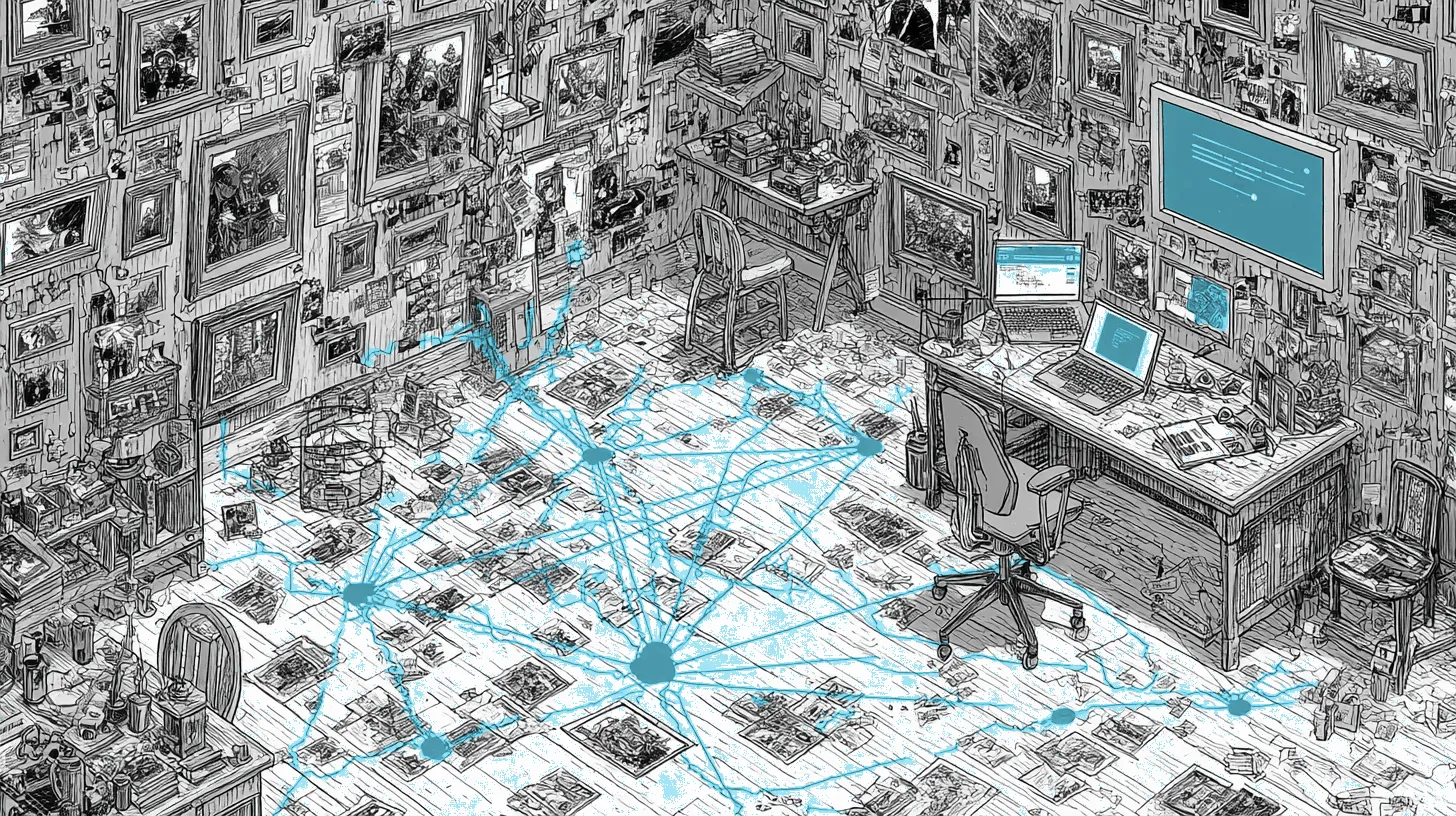
Individual insurance fraud — one person exaggerating one claim — is the most common form of fraud. But organized fraud rings cause disproportionate damage. A single ring can submit dozens or hundreds of coordinated claims across multiple insurers, generating losses in the millions before detection.
AI tools are transforming how these rings operate. The same technology that lets an individual fabricate a single claim lets a ring fabricate hundreds — with less coordination, lower risk, and higher output.
How Fraud Rings Traditionally Operate
The Classic Structure
A traditional insurance fraud ring involves:
The organizer: Recruits participants, selects targets, coordinates timing, and manages proceeds. This person has knowledge of insurance processes and detection methods.
The participants: File the fraudulent claims. May include staged accident participants, policyholders who lend their identities, and individuals who assume synthetic or stolen identities.
The service providers: Corrupt or complicit professionals who generate supporting documentation — medical providers who write false injury reports, repair shops that inflate estimates, lawyers who file fraudulent claims.
The claims: Typically follow a pattern — staged motor vehicle accidents, fabricated injury claims, inflated property damage. The ring submits claims across multiple insurers to avoid concentration detection.
Traditional Operational Requirements
Running a fraud ring without AI requires:
- Physical coordination: People must be present for staged incidents
- Complicit professionals: Medical providers, repair shops, or lawyers who generate false documentation
- Identity management: Real people using their real identities (or stolen ones), creating exposure
- Evidence production: Physical staging of incidents, which requires time, location access, and risk of witnesses
- Communication: Coordination between participants, which creates interceptable communications
Each of these requirements creates exposure. Law enforcement and insurer SIUs detect rings by identifying these operational signatures: common addresses, shared phone numbers, connected social networks, and patterns of claims involving the same providers.
How AI Changes the Economics
Evidence Generation at Scale
Before AI: A ring staging motor vehicle accidents needs actual vehicles, actual collisions (or the appearance of them), and photographs of real damage. Each “incident” requires physical effort.
With AI: A single person with AI tools can generate damage photos for dozens of fictitious incidents. Vehicle damage, property damage, injury documentation — all produced from prompts, not from physical staging. The operational effort per claim drops from days to minutes.
Document Fabrication Without Complicity
Before AI: Fraud rings needed corrupt professionals to produce false documentation — a doctor to sign a fabricated medical report, a mechanic to write an inflated estimate. Each complicit professional is a potential witness, a potential whistleblower, and a point of investigation.
With AI: Large language models produce professional-quality documents — medical reports, repair estimates, police report narratives — with appropriate terminology, formatting, and structure. Document generation requires no human accomplice.
Combined with AI-generated letterheads, signatures, and stamps, the ring can produce complete documentation packages without involving any legitimate professional. The entire evidence chain is synthetic.
Synthetic Identity Infrastructure
Before AI: Identity fraud required stolen identities or crude fabrication. A 2019 Federal Reserve white paper cited a widely reported estimate of US$6 billion in US lender losses in 2016 from synthetic identity fraud — even with pre-AI methods.
With AI: Synthetic identities can be created with:
- AI-generated face photos for identity documents
- Generated personal histories and contact details
- Voice clones for phone-based verification
- Deepfake video for KYC and liveness checks
A ring can create dozens of fictitious policyholders, each with a consistent, verifiable-looking identity — insure them, build claims history with small legitimate-appearing claims, and then submit large fraudulent claims simultaneously.
Reduced Coordination Overhead
Before AI: Fraud rings fail when communication is intercepted, participants flip, or organizational structure is exposed. Every additional participant increases exposure.
With AI: A single operator could plausibly run a scheme that once needed many participants. One person generates all evidence, creates all documents, manages all identities, and submits all claims. The ring’s “structure” may be a single person with a laptop.
Detection: Finding the Ring
Why Traditional Detection Misses AI-Enabled Rings
Traditional ring detection looks for:
- Common entities: Same addresses, phone numbers, or vehicles across claims
- Network connections: Social media connections, family relationships, shared professionals
- Temporal patterns: Claims filed in clusters around the same date
- Geographic clustering: Multiple claims from the same area involving the same incident type
AI-enabled rings can evade many of these:
- Synthetic identities have different addresses, phone numbers, and no shared entities
- Fictitious people have no real social network to analyze
- Claims can be spread across time periods and geographic areas
- Each claim can involve different “incident” types, vehicles, and properties
Signals Forensic Analysis Can Surface
While AI-enabled rings evade some traditional pattern detection, their evidence carries a different kind of trace — digital forensic signals that investigators can use as leads. None of these is proof of a ring on its own; each needs corroboration.
1. Generation and manipulation traces. Per-image forensic analysis looks for the statistical traces generation and editing tools leave — patterns in the frequency domain, noise distributions and compression artifacts. When several claims from different “claimants” all contain AI-generated or edited images, that pattern is worth investigating.
2. Image similarity. Images can be compared across an insurer’s own claims files — not just visually, but at the feature level. If two claims from different people in different states contain near-identical or closely related photos (recycled images, similar composition, shared artifacts), that’s a signal.
3. Document templates and structure. Documents produced from the same template or toolchain often share layout, fonts, structure and file metadata, even when the content differs. (Detecting AI-written text by its wording is far less reliable: OpenAI withdrew its own AI-text classifier in 2023 because of its low accuracy.)
4. Metadata correlation. Even synthetic evidence has metadata. If multiple claims contain images created by the same software, on the same device, at similar timestamps — despite being filed by different people in different locations — that’s a strong lead.
5. Behavioral pattern analysis. Claims filed by the same operator, despite different identities, may share subtle behavioral patterns: similar filing times, similar response patterns to adjuster questions, similar document formatting choices.
The Investigation Workflow
When forensic analysis surfaces potential ring indicators:
Stage 1: Clustering. Group claims that share forensic signals. Even if the claims involve different identities, locations and incident types, shared digital traces can connect them.
Stage 2: Network mapping. In your investigation tooling, build a network graph showing connections between claims: similar or reused images, common document templates, metadata correlations and temporal patterns.
Stage 3: Entity resolution. Determine whether the connected claims trace back to a common source — the same generation tools, the same submission patterns, or the same digital infrastructure.
Stage 4: Investigation. Once the ring is mapped, traditional SIU techniques apply — identity verification, background checks, physical verification of claimed incidents, and coordination with law enforcement.
Stage 5: Cross-insurer intelligence. If the ring operates across multiple insurers, share intelligence through industry bodies:
- NICB (United States)
- Insurance Council of Australia counter-fraud function (Australia)
- Insurance Fraud Bureau (United Kingdom)
Cross-insurer intelligence is critical because a ring specifically distributes claims to avoid concentration with any single insurer.
Building Ring Detection Capability
Technical Requirements
| Capability | Purpose | Implementation |
|---|---|---|
| Image forensics | Flag AI-generated or edited images | Per-image analysis at intake |
| Image similarity | Find reused or near-identical evidence | Comparison against the insurer’s own files |
| Document forensics | Flag structural and fabrication anomalies | Per-document analysis at intake |
| Metadata correlation | Find common digital origins | Correlation in the insurer’s analytics |
| Network graphing | Visualize claim connections | Investigation tool for SIU |
| Alerting | Flag potential ring indicators | Automated alerts when patterns emerge |
Organizational Requirements
SIU training. Investigators need to understand AI-generated fraud — what it looks like, how to investigate it, and how to build evidence for prosecution.
Cross-insurer protocols. Establish information-sharing agreements with industry bodies and peer insurers. Ring detection is an industry problem, not a single-insurer problem.
Legal preparation. Ring prosecution depends on evidence that qualified experts can review, explain and test. Keep original files, document the methods used, and make sure automated findings are confirmed by people — see our article on forensic reports that hold up to expert scrutiny.
Industry Collaboration
No single insurer can detect a ring that operates across the industry. The Coalition Against Insurance Fraud estimates that insurance fraud costs American consumers at least US$308.6 billion a year. Organized fraud is part of that bill — and AI tools are making organized fraud more scalable.
Industry-wide detection requires:
- Shared databases of fraud indicators (anonymized, privacy-compliant)
- Common reporting standards for AI-generated fraud
- Coordinated investigation when cross-insurer rings are identified
- Regular intelligence sharing on emerging tools and techniques
deetech™ gives insurers and claims teams per-file analysis of claim images, documents and other supported media, plus image-similarity signals across the organization’s own files — inputs that SIU teams can use alongside their network analytics. Request a demo.
Sources cited in this article: