Catastrophe Event Fraud: How AI-Generated Claims Spike After Natural Disasters
Natural disasters create the perfect conditions for AI-generated insurance fraud — high volume, fast processing, and overwhelmed adjusters. How to detect it.
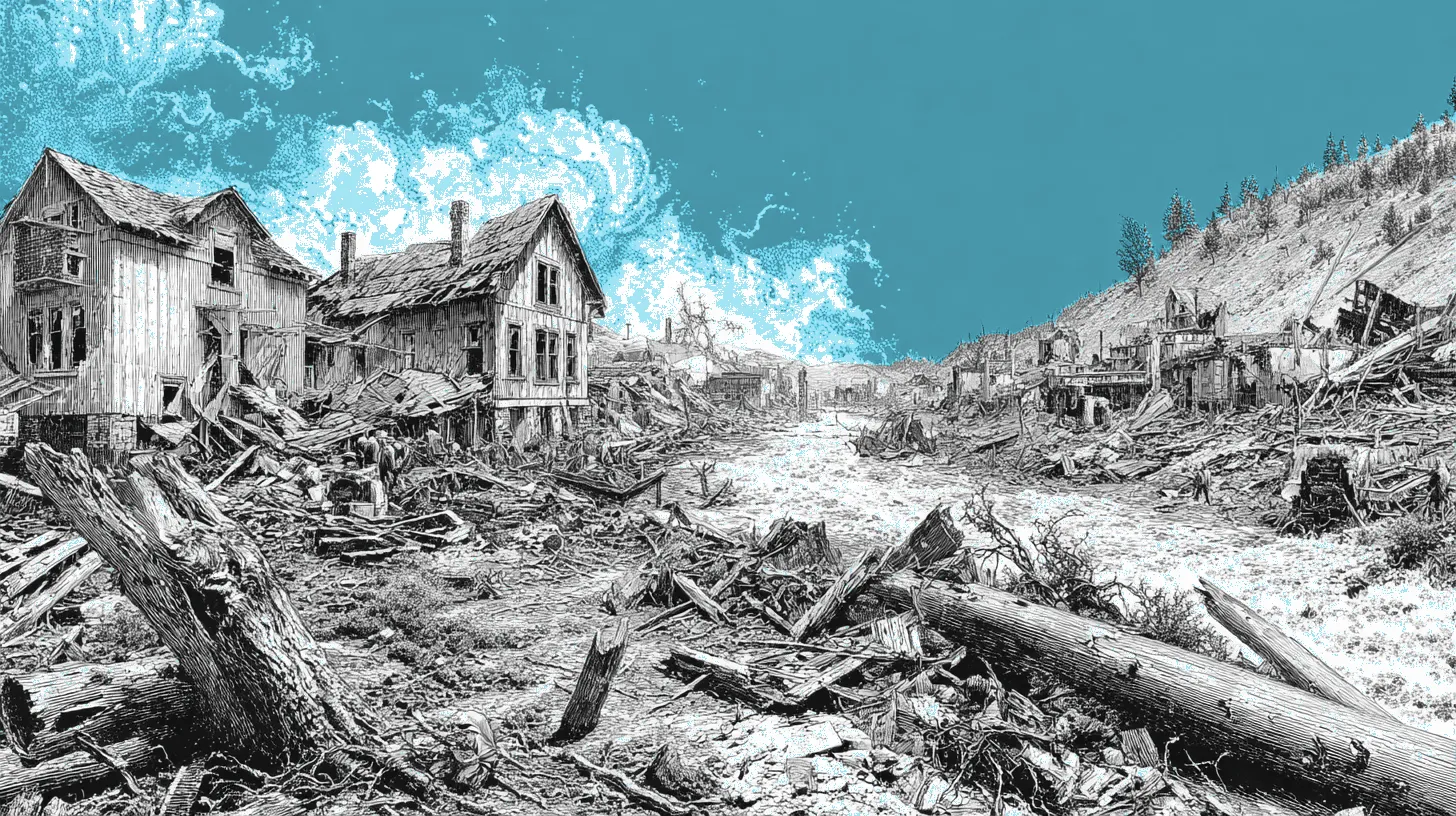
After every major catastrophe event — bushfire, cyclone, flood, earthquake, severe storm — insurers experience a surge of claims. Mixed in with the legitimate claims from people who genuinely lost their homes, vehicles, and possessions are fraudulent claims from people who didn’t.
This is not new. Opportunistic fraud after natural disasters has been documented for decades. What’s new is the tool that makes it dramatically easier: AI-generated evidence.
This article is the overview: why catastrophe (CAT) events attract fraud, how AI changes it, and what insurers should put in place before, during and after an event. For the evidence itself and lessons from past disasters in the US and Australia, see post-disaster fraud and AI-generated evidence. For the analytics behind spotting coordinated campaigns in a surge, see claims surge analysis.
Why CAT Events Are Perfect for Fraud
Volume Overwhelms Review
A major CAT event can generate tens of thousands of claims in days. The February–March 2022 floods in South East Queensland and New South Wales ultimately produced about 246,000 insurance claims. Bushfire seasons, cyclones, and severe storm events routinely generate claims volumes that overwhelm normal processing capacity.
Under these conditions:
- Adjusters can face several times their normal caseload
- Review times compress from days to hours
- Straight-through processing thresholds may be raised to speed up payouts
- Public and political pressure to pay claims quickly intensifies
- Detailed inspection of every claim becomes physically impossible
This is exactly the environment where fraudulent evidence is least likely to be scrutinized.
Damage Is Plausible
In a localized fraud outside a CAT event, the insurer can cross-reference: was there a storm in this area? Was the claimed damage consistent with local conditions? These checks create friction for fraudsters.
During a CAT event, the damage is expected. Everyone in the affected area has a plausible claim. The question shifts from “did damage occur?” to “how much damage occurred?” — and that’s where manipulation thrives. Minor damage exaggerated to total loss. Pre-existing damage attributed to the event. Damage from one property applied to another.
Chaos Enables Opportunity
The period immediately after a disaster is chaotic:
- Communication networks may be disrupted
- Physical access to damaged areas may be restricted
- Independent verification (inspections, third-party assessments) is delayed
- Claimants may be displaced, making contact verification difficult
- Emergency provisions may relax normal documentation requirements
Each of these conditions makes it harder to verify claims and easier for fraudulent claims to pass.
How AI Tools Amplify CAT Fraud
Evidence Fabrication
Before AI: A fraudster wanting to exaggerate property damage needed to physically stage the damage or photograph someone else’s more severe damage. Both carry risk — physical staging is time-consuming and detectable, and using someone else’s photos risks recognition.
With AI: The fraudster photographs their genuine minor damage, then uses AI editing tools to escalate the severity. Inpainting tools can transform a cracked window into a shattered facade. Image generation can add water damage, fire damage, or structural collapse to genuine photos of the property.
The result: photos that show the correct property, the correct surroundings, and plausible damage — but with severity dramatically exaggerated.
Scale of Fabrication
Before AI: Manufacturing evidence for a single fraudulent claim was labor-intensive. Manufacturing evidence for multiple claims (a fraud ring) required coordination and physical resources.
With AI: Evidence generation scales. A single person with AI tools can generate convincing damage photos for multiple properties, create supporting documentation, and submit claims across multiple insurers simultaneously. Organized fraud rings are a long-standing problem for insurers; AI tools substantially reduce the people, time and physical resources such rings need.
Temporal Exploitation
CAT events create a narrow window where claims volume is high and review is light. AI tools allow fraudsters to generate and submit evidence within this window — before insurers have time to implement enhanced scrutiny.
A fraudster monitoring weather events can prepare templates and tools in advance, then generate and submit claims within hours of a declared event — positioning their fraudulent claim within the first wave of legitimate claims, when processing speed is prioritized over thoroughness.
Australian Context
Australia’s exposure to natural catastrophes makes CAT fraud particularly relevant:
Bushfires. The 2019–2020 Black Summer bushfires generated about 38,000 insurance claims and A$2.3 billion in insured losses (Insurance Council of Australia data). Property damage from fire is visually dramatic and relatively easy to fabricate or exaggerate with AI tools.
Floods. The 2022 floods in South East Queensland and New South Wales resulted in about 246,000 claims and roughly A$6.4 billion in insured losses — the costliest insured event in Australian history, according to the Insurance Council of Australia. Water damage is particularly susceptible to AI manipulation — the difference between “flood-affected” and “total loss” can be convincingly fabricated in photos.
Cyclones. Northern Australia experiences regular cyclone seasons. Structural wind damage, debris fields, and roof damage are all content types that current AI tools can generate or manipulate convincingly.
Severe storms. Hailstorms cause significant vehicle and property damage. Hail damage to vehicles — dents, paint damage, windscreen cracks — is among the easiest content types to fabricate or exaggerate with AI image editing.
The Insurance Council of Australia notes that “the cost of fraud, be it opportunistic or pre-meditated, is a cost of claims and adds to the premium cost for all insurance consumers.” During CAT events, when claims volumes are highest and fraud detection is most strained, the premium impact of undetected fraud is amplified.
Detection Strategies for CAT Events
Pre-Event Preparation
1. Establish baseline detection before the event. AI detection should be running on your claims pipeline before a CAT event — not deployed during one. Detection systems need to be tuned, tested, and operational before the surge hits.
2. Plan for surge capacity. If your detection pipeline handles 1,000 claims a day normally, work out now how it will cope with ten or twenty times that during a CAT event. Agree throughput, batching and queuing with your detection provider before the season, not during it.
3. Pre-position cross-reference data. Before an event, compile the data you’ll need for verification: aerial/satellite imagery of the affected area (pre-event baseline), weather data for the event period, property databases for the affected region.
During the Event
4. Screen every claim at intake. During a CAT event, the temptation is to bypass normal checks to speed up processing. This is exactly wrong. Automated detection runs asynchronously alongside normal processing: image checks often return quickly, while video and large batches take longer — either way, far less than a manual review.
5. Cross-reference with geospatial data. After a CAT event, satellite imagery of affected areas becomes available (from services like Maxar, Planet Labs, and government agencies). Cross-referencing claimed damage locations against actual damage patterns is a powerful fraud signal.
6. Cluster analysis. During a CAT event, look for clusters of claims with similar photographic characteristics — identical angles, similar lighting, or shared digital fingerprints. These may indicate a single source generating evidence for multiple claims.
7. Temporal analysis. Claims submitted within hours of an event, before the claimant could plausibly have assessed their damage, warrant enhanced scrutiny. Legitimate claimants in a disaster zone are focused on safety, not insurance claims, in the immediate aftermath.
Post-Event Review
8. Batch re-analysis. After the immediate surge, re-analyze CAT event claims with deeper detection, image-similarity checks and pattern matching. This catches fraud that passed the real-time screen.
9. Compare claimed vs actual damage. When independent inspections eventually occur, compare the inspection findings against the originally submitted evidence. Significant discrepancies (claim photos showing total loss but inspection finding minor damage) trigger investigation.
10. Feed results back into your fraud program. Every confirmed CAT fraud case improves your rules, models and reviewer training for the next event. Document the generation tools used, the manipulation patterns observed, and the detection methods that caught them.
The Cost of Inaction
If deepfake-enabled fraud adds even 1–2 percentage points to the fraud rate during CAT events, the dollar impact is large. The following is illustrative — assumptions, not measured deetech outcomes:
- An A$5 billion CAT event with an assumed 10% baseline fraud rate = A$500 million in fraud
- If AI tools lifted that rate to an assumed 12% = A$600 million in fraud
- The modeled incremental cost = A$100 million — from a single CAT event
Weigh the cost of detection infrastructure against exposure on that scale.
Related Reading
- Claims Surge Analysis: The Technical Approach
- Post-Disaster Fraud: Evidence and Lessons
- Property Fraud
- Fraud Statistics
deetech™ gives insurers and claims teams asynchronous detection APIs and batch analysis — up to 20 files per request on standard plans and up to 100 on Enterprise, for images, audio and documents (video is submitted individually). Request a demo to plan screening for your catastrophe season.
Sources cited in this article: