The Anatomy of a Deepfake Insurance Claim: From Creation to Detection
An end-to-end walkthrough of how fraudsters create and submit deepfake insurance claims — and the detection opportunities at every stage of the process.
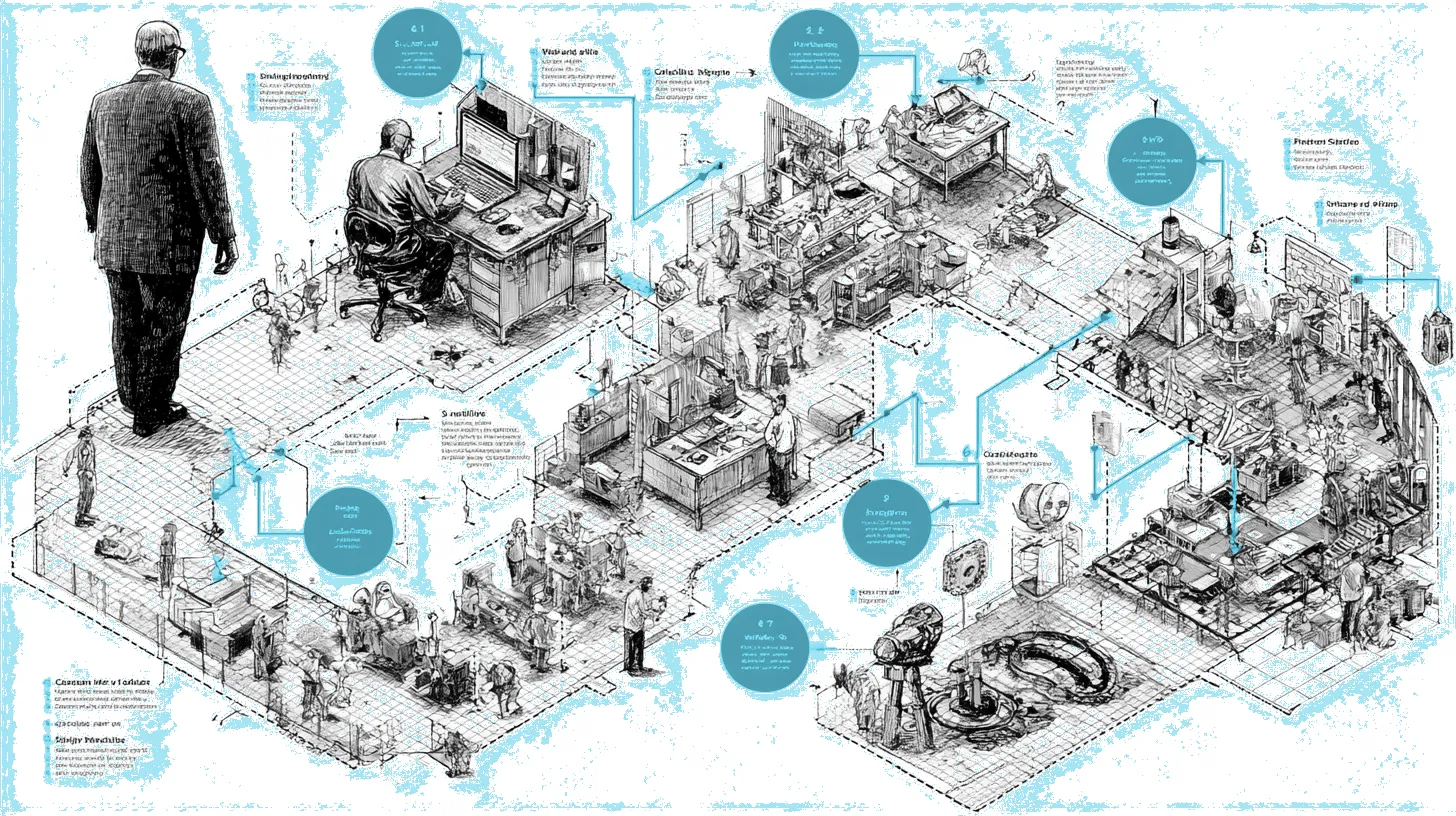
Insurance fraud has always followed a pattern: fabricate evidence, submit a claim, collect the payout. What’s changed is the quality of fabrication. With consumer-grade AI tools now capable of generating photorealistic images, convincing video, and cloned voices in minutes, the barrier to creating fraudulent evidence has collapsed.
Understanding how a deepfake insurance claim moves from creation to submission is the first step toward stopping it. This article maps the full lifecycle of a synthetic media fraud attempt — and identifies the detection opportunities insurers have at each stage.
Stage 1: Target Selection and Research
Before any AI tool is opened, the fraudster selects a target scenario. This stage is entirely traditional — and it’s where many fraud rings demonstrate surprising sophistication.
What the fraudster does
The fraudster identifies a claim type with three characteristics: high payout potential, low investigation likelihood, and evidence that’s difficult to independently verify. Property damage claims following natural disasters are ideal targets. So are motor vehicle accidents in low-surveillance areas and personal injury claims requiring medical documentation.
Organized fraud rings research insurer-specific thresholds. Many insurers fast-track low-value claims with minimal human review, and fraudsters try to learn where those limits sit. The stakes are large: the Coalition Against Insurance Fraud estimates insurance fraud costs Americans US$308.6 billion a year, and the FBI estimates non-health insurance fraud alone exceeds US$40 billion a year in the US.
Detection opportunity
Behavioral analytics at the policy level can flag suspicious patterns before any claim is filed. Policies taken out shortly before a claim, unusual coverage increases, or clusters of policies from the same address or IP range all warrant scrutiny. Cross-referencing new policy applications against known fraud indicators remains an effective first line of defense.
Stage 2: Evidence Fabrication
This is where deepfake technology transforms the fraud landscape. The fraudster generates synthetic evidence tailored to the claim type.
Image generation for property claims
For property damage claims, fraudsters use image generation models (Stable Diffusion, FLUX, Midjourney, the image tools built into ChatGPT and Gemini, or fine-tuned variants) to create images of damaged property. The process has become remarkably accessible:
- Base image acquisition: The fraudster photographs the actual property in its undamaged state, or sources a similar property image online.
- Damage synthesis: Using inpainting or img2img workflows, AI adds realistic-looking damage — water stains, fire damage, structural collapse, storm debris.
- Post-processing: The generated image is run through compression, resizing, and metadata manipulation to mimic a smartphone camera output.
Modern generators can produce images that pass casual visual inspection. In a 2025 Microsoft AI for Good study of more than 12,500 participants, people told real images from AI-generated ones correctly only 62% of the time, only modestly better than chance.
Video fabrication for incident claims
For motor vehicle or liability claims, fraudsters generate synthetic video evidence. This might include dashcam-style footage of a staged accident, security camera perspectives showing an alleged incident, or bodycam or bystander footage supporting a personal injury narrative. Tools like Google’s Veo, OpenAI’s Sora, Runway, and open-source alternatives can generate short, realistic video clips, some with synchronized sound. Video still tends to carry more detectable artifacts than still images, but quality improves with each model release.
Voice cloning for identity fraud
For claims requiring verbal statements or call-based verification, voice cloning enables fraudsters to impersonate policyholders. Commercial services such as ElevenLabs report good results from voice samples as short as 30 seconds. This is particularly dangerous for call center verification processes.
Detection opportunity
This is the stage where forensic analysis yields the highest returns. AI-generated images and video often contain detectable signatures: compression artifact inconsistencies, frequency domain anomalies, metadata gaps, and traces left by particular generators. Automated detection at the point of evidence upload can catch fraud before it enters the claims pipeline.
For a detailed technical breakdown of these signatures, see our analysis of AI-generated property damage photos.
Stage 3: Metadata Manipulation
Raw AI-generated content lacks the metadata footprint of a genuine photograph. A real smartphone photo carries EXIF data including GPS coordinates, device model, lens parameters, timestamp, and software version. AI-generated images carry none of this by default.
What the fraudster does
Sophisticated fraudsters address this gap through several techniques:
- EXIF injection: Tools like ExifTool allow insertion of fabricated metadata — device model, GPS coordinates matching the claimed location, timestamps consistent with the alleged incident.
- Screenshot laundering: Taking a screenshot of the generated image on a real device creates genuine device metadata, though it strips some camera-specific fields.
- Re-photography: Displaying the generated image on a screen and photographing it with a real phone creates authentic camera metadata. This also introduces real-world optical characteristics that can mask AI generation signatures.
- Social media laundering: Uploading to and downloading from social media platforms strips original metadata and adds platform-specific compression, making provenance analysis harder.
Detection opportunity
Metadata analysis remains valuable despite manipulation attempts. Inconsistencies between claimed EXIF data and image characteristics are detectable. A photo claiming to be from an iPhone 15 should exhibit specific lens distortion patterns, color processing signatures, and JPEG compression characteristics. When these don’t match, it’s a red flag.
Temporal analysis also helps. If EXIF timestamps don’t align with lighting conditions in the image, or GPS data conflicts with weather records for that location and time, the fabrication becomes apparent.
Stage 4: Claim Submission
With evidence prepared, the fraudster submits the claim through standard channels — typically online portals, email, or mobile apps.
What the fraudster does
The submission itself is designed to appear routine. Fraudsters often submit during high-volume periods — after natural disasters, during holiday seasons, or at month-end when adjusters carry heavier caseloads. The goal is to avoid triggering manual review.
Organized rings may submit multiple related claims through different policyholders, spacing submissions to avoid temporal clustering alerts. Each claim stays below fast-track thresholds. The aggregate fraud across the ring, however, can reach hundreds of thousands of dollars.
Post-disaster surge events are particularly vulnerable. When an insurer receives thousands of legitimate claims simultaneously, the sheer volume creates cover for fraudulent submissions.
Detection opportunity
Automated scanning at the point of submission is critical. Every image, video, and document uploaded should pass through deepfake detection before entering the claims workflow. This is where speed and scale matter more than forensic perfection. Automated image screening often returns in seconds, and longer media such as video can run asynchronously, so screening need not disrupt the claimant experience.
Checks across claims at submission time can also surface patterns worth review. Image similarity detection, reverse image search, and geographic clustering analysis can flag reused images and suspicious groupings for an investigator to examine.
Stage 5: Initial Assessment
The claim enters the insurer’s triage process. An adjuster — human or automated — reviews the submission for completeness and assigns it a complexity rating.
What the fraudster relies on
Fraudsters rely on volume and normalcy. A well-constructed claim with complete documentation, consistent metadata, and a plausible narrative will pass initial triage in most systems, especially when straightforward claims get only a few minutes of review.
Automated triage systems that rely on document completeness checks and basic rule engines will not catch synthetic evidence. The documents are complete. The rules are satisfied. The evidence is fabricated.
Detection opportunity
AI-powered risk scoring at triage should incorporate deepfake detection signals alongside traditional fraud indicators. A claim scoring high on deepfake probability — even if all other indicators appear normal — should be escalated for detailed review.
Integration matters here. Detection signals should flow into existing case management systems (through an API integration, for example) rather than sit in a separate dashboard. Adjusters need a clear flag in their workflow, not a second tool to check.
Stage 6: Investigation (If Triggered)
If a claim is flagged for investigation — whether by automated detection, adjuster suspicion, or random audit — the insurer conducts a deeper review.
What the fraudster fears
Investigation introduces verification steps that synthetic evidence often cannot survive:
- Physical inspection: Sending an adjuster to the claimed location reveals whether reported damage actually exists.
- Independent documentation: Requesting additional photos taken under controlled conditions (specific angles, timestamps, or with verification markers) is difficult to fake convincingly.
- Third-party verification: Cross-referencing with police reports, weather data, satellite imagery, and contractor assessments introduces external evidence that the fraudster doesn’t control.
- Digital forensics: Detailed analysis of submitted media (frequency domain analysis, error level analysis, generator-trace detection) can provide strong supporting evidence that content is synthetic.
Detection opportunity
Forensic-grade analysis is appropriate at this stage. The claim has already been flagged; thoroughness matters more than speed. Detailed technical analysis of media files, combined with traditional investigation techniques, provides the evidence needed for claim denial or referral to law enforcement.
The key insight: forensic analysis at investigation stage catches fraud that’s already been flagged. Automated detection at submission stage prevents fraudulent claims from consuming investigation resources in the first place.
Stage 7: Resolution
The claim is either paid, denied, or referred for further action.
The cost of failure
When deepfake claims are paid, the cost extends beyond the individual payout. It validates the fraudster’s methodology, funds further fraud attempts, and in the case of organized rings, finances the development of more sophisticated techniques.
In the UK, the Association of British Insurers estimates that fraud adds around £50 to the average policyholder’s annual premium. In Australia, the Insurance Council reports that members detected A$560 million of motor and property fraud in 2023, and estimates that roughly another A$400 million goes undetected each year.
The detection imperative
Every stage of this lifecycle presents detection opportunities. The most effective approach layers multiple detection methods:
| Stage | Detection Method | Speed Requirement |
|---|---|---|
| Policy application | Behavioral analytics | Minutes |
| Evidence upload | Automated deepfake detection | Seconds |
| Metadata review | Automated consistency checks | Seconds |
| Claim submission | Cross-claim correlation | Minutes |
| Initial triage | AI risk scoring | Minutes |
| Investigation | Forensic analysis | Hours to days |
The earlier fraud is detected, the lower the cost. Catching a deepfake at upload costs pennies in compute. Investigating a fully processed claim costs thousands in adjuster time, forensic analysis, and potential litigation.
Building a Layered Defense
No single detection method catches every deepfake claim. The technology evolves too quickly and the attack surface is too broad. Effective defense requires layering:
- Automated screening at ingestion: Every piece of media scanned as it arrives. This catches many current-generation deepfakes and deters opportunistic fraud.
- Metadata and consistency analysis: Automated checks for EXIF integrity, timestamp plausibility, and device fingerprint consistency.
- Cross-claim intelligence: Pattern detection across claims — image reuse, geographic clustering, temporal correlation with coordinated fraud patterns.
- Escalation-triggered forensics: Detailed analysis reserved for flagged claims, combining digital forensics with traditional investigation.
- Regular model updates: Detection models re-evaluated and updated as new generation techniques appear. The arms race between detection and generation demands ongoing investment.
Conclusion
The deepfake insurance claim is not a hypothetical future threat. It is a present reality enabled by tools that are free, accessible, and improving monthly. Understanding the full anatomy of these claims — from target selection through evidence fabrication to submission and resolution — reveals that detection opportunities exist at every stage.
The question for insurers is not whether to invest in deepfake detection, but where in the claims lifecycle to deploy it. The answer, increasingly, is everywhere.
To see how deetech™ helps insurers and claims teams screen claims media at upload and support SIU review, visit our solutions page or request a demo.