AI Voice Fraud in Insurance: When the Policyholder Isn't Who They Sound Like
How AI voice cloning enables insurance fraud through policyholder impersonation, including case scenarios for policy changes, beneficiary fraud, and claims.
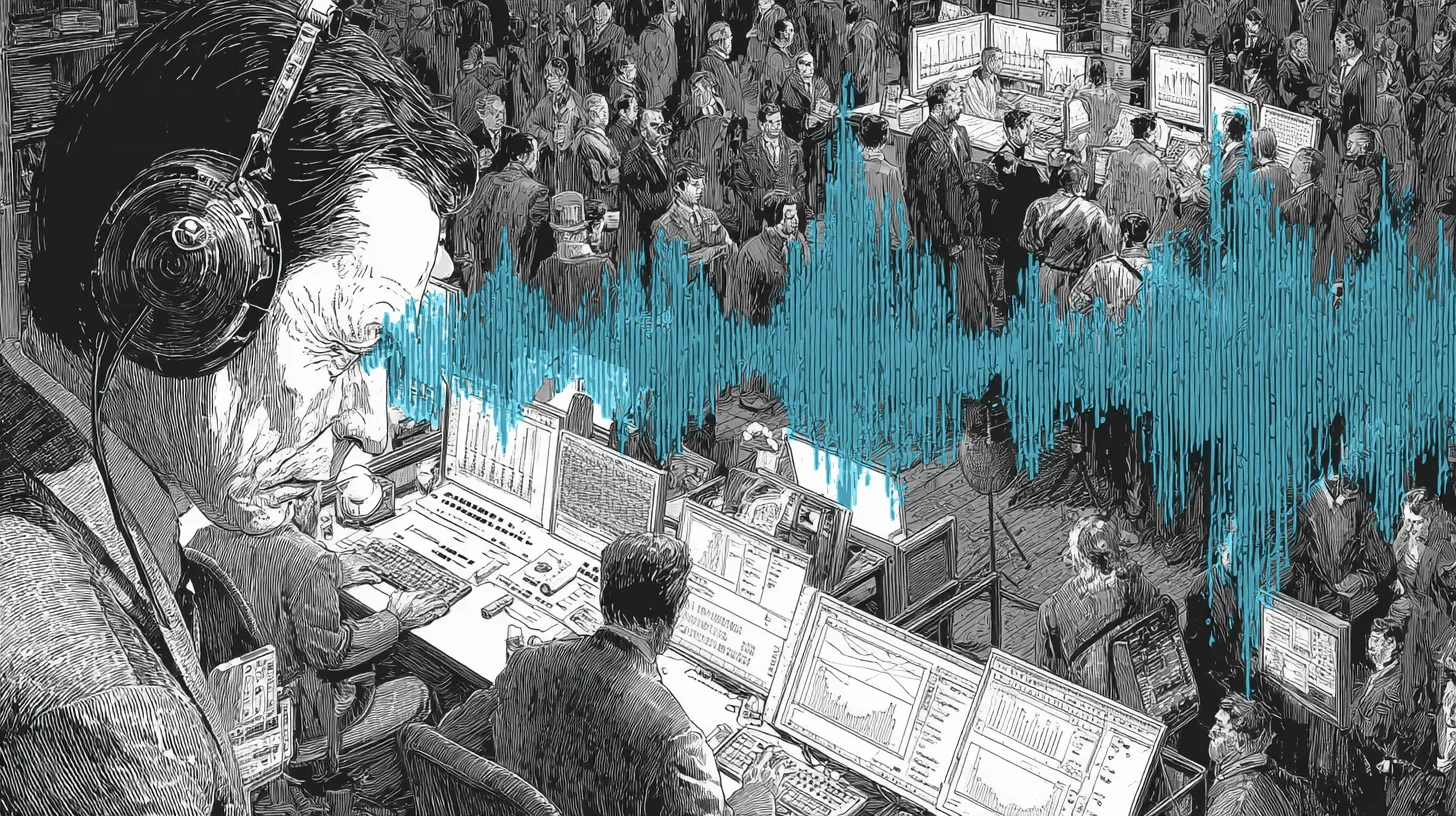
A call comes into the insurer’s customer service line. The caller provides the correct policy number, date of birth, and address. They pass the voice verification check. They request a change of beneficiary on a life insurance policy. Three weeks later, the real policyholder dies. The new beneficiary — a stranger — files a claim and collects.
This scenario is now technically feasible. Voice cloning has reached the point where research systems can imitate a speaker from as little as three seconds of sample audio (Microsoft’s VALL-E research, 2023), and commercial tools need only a minute or two. For the insurance industry, which handles huge volumes of voice interactions, this is a fundamental threat to phone-based identity checks.
The State of Voice Cloning Technology
How Voice Cloning Works
Modern voice cloning uses deep learning models trained on speech data to replicate a target speaker’s vocal characteristics — pitch, cadence, accent, intonation, and timbre. The process has three stages:
-
Sample Collection — The attacker obtains audio of the target’s voice. Sources include social media videos, voicemail greetings, recorded webinars, podcast appearances, or customer service call recordings obtained through data breaches.
-
Model Training — The audio is fed into a voice synthesis model. Current-generation systems need only seconds to a couple of minutes of clean audio to produce a recognizable clone. Higher-quality clones use more varied speech.
-
Real-Time Synthesis — The attacker speaks into a microphone, and the AI transforms their voice to match the target in real time, with latency low enough for natural conversation.
Accessibility and Cost
The barrier to entry has collapsed:
- Open-source models (XTTS, Bark, Tortoise-TTS) are freely available and run on consumer hardware
- Commercial services offer voice cloning on low-cost monthly plans
- Quality of synthetic voices has reached a point where human listeners cannot reliably distinguish them from authentic speech. A 2023 University College London study found that listeners identified deepfake speech only 73% of the time, and training helped only slightly.
Insurance-Specific Attack Scenarios
Voice-based fraud in insurance targets the industry’s reliance on telephone interactions for high-value transactions. The key scenarios:
Scenario 1: Beneficiary Change Fraud
The Attack: The fraudster clones the policyholder’s voice using publicly available audio. They call the insurer’s customer service line and request a change of beneficiary on a life insurance or superannuation policy. They pass knowledge-based authentication (KBA) using information obtained through social engineering or data breaches, and pass voice verification using the cloned voice.
The Impact: When the policyholder dies — whether naturally or, in extreme cases, through foul play — the fraudulent beneficiary collects. Life insurance payouts can reach millions of dollars.
Why It Works:
- Beneficiary changes are routine transactions
- Call center agents are not trained to detect synthetic speech
- KBA questions (date of birth, address, mother’s maiden name) are widely compromised through data breaches
- Voice biometric systems designed for convenience, not adversarial robustness, can be bypassed
Scenario 2: Claims Authorization Fraud
The Attack: In workers’ compensation, income protection, or health insurance, claimants must often authorize treatment, confirm ongoing disability, or approve claim actions by phone. A fraudster impersonates the legitimate claimant to authorize inflated claims, approve unnecessary treatments (kickback schemes), or maintain fraudulent disability claims.
The Impact: Ongoing claim inflation can persist for months or years before detection, with cumulative losses reaching hundreds of thousands of dollars per case.
Why It Works:
- Ongoing claims involve repeated voice interactions that build false familiarity
- Claims handlers may become less vigilant with “known” voices over time
- Verification often relaxes after initial claim establishment
Scenario 3: Policy Surrender and Loan Fraud
The Attack: The fraudster impersonates the policyholder to surrender a whole-of-life or endowment policy, or to take a policy loan. The payout or loan amount is directed to an account controlled by the fraudster.
The Impact: The policyholder loses their insurance coverage and accumulated cash value, often without realizing it until a claim is needed.
Why It Works:
- Policy surrenders are processed as routine financial transactions
- Verification relies on the same KBA and voice checks used for other transactions
- Surrender values can be substantial — decades of premium accumulation
Scenario 4: Third-Party Impersonation in Motor and Property Claims
The Attack: In motor or property insurance, claims often involve phone interactions with third parties — witnesses, repair providers, medical practitioners. Fraudsters use voice cloning to impersonate these third parties, fabricating or inflating evidence to support fraudulent claims.
The Impact: Fabricated witness statements and inflated damage assessments increase claim payouts. Organized fraud rings can scale this across many claims.
Why It Works:
- Insurers have no voice reference for third parties, making comparison impossible
- Phone-based verification of third parties is often cursory
- The volume of third-party interactions makes detailed verification impractical without technology
Scenario 5: Social Engineering of Insurance Staff
The Attack: Fraudsters impersonate senior executives, regulators, or business partners to manipulate insurance staff into bypassing controls. A cloned voice of the CEO instructing a claims manager to expedite payment of a large claim can be devastatingly effective.
The Impact: Internal control bypasses can result in single-event losses of millions — as demonstrated by the Hong Kong case reported in February 2024, where a finance worker paid out about US$25.6 million after a video call with deepfaked colleagues.
Why It Works:
- Authority bias makes staff reluctant to challenge perceived superiors
- Urgency framing (“this needs to be done today”) bypasses normal procedures
- Voice adds a layer of credibility that email-based social engineering lacks
Voice Biometric Bypass Techniques
Many insurers have invested in voice biometric systems as a security measure. These systems are increasingly vulnerable. Researchers at the University of Waterloo (IEEE Symposium on Security and Privacy, 2023) showed an attack that bypassed voice authentication with up to a 99% success rate after six attempts.
Replay Attacks
The simplest attack: recording authentic speech and playing it back to the biometric system. Modern systems include replay detection, but implementations vary in robustness.
Real-Time Voice Conversion
The attacker speaks naturally while software converts their voice to match the target in real time. This defeats replay detection because the speech is live, original, and responsive to conversation. Current-generation voice conversion offers:
- Speaker similarity close enough to the target to pass some voiceprint checks
- Low latency, enabling natural conversation
- Prosody matching that captures the target’s speech patterns, not just voice timbre
Adversarial Audio Injection
Sophisticated attackers bypass the microphone entirely, injecting synthetic audio directly into the phone line or VoIP connection. This eliminates acoustic artifacts that some detection systems use to identify synthetic speech.
Text-to-Speech with Voice Cloning
For non-real-time interactions (voicemail, recorded messages, asynchronous verification), attackers generate synthetic speech from text using the cloned voice model. This produces high-quality audio with precise content control.
Detection Technology for Insurance Voice Workflows
Detecting AI-generated voice fraud requires technology suited to insurance voice workflows:
Spectral Analysis
Synthetic speech exhibits spectral characteristics that differ from human speech in ways imperceptible to the human ear but detectable by analysis:
- Spectral envelope irregularities — AI-generated speech often shows unnatural smoothness in frequency transitions
- Formant patterns — The resonance frequencies that characterize vowel sounds may differ subtly from natural production
- Harmonic structure — Synthetic speech generators can produce harmonic patterns that diverge from the natural physics of vocal cord vibration
Temporal Analysis
Natural human speech contains micro-variations in timing that are extremely difficult for AI to replicate:
- Breathing patterns — Natural speech includes breath sounds that are consistent with the speaker’s physiology. Synthetic speech often has irregular or absent breathing artifacts
- Micro-pauses — The tiny hesitations and variations in natural speech timing follow patterns that AI generation tends to over-regularize
- Prosodic variation — The natural rise and fall of pitch and volume in connected speech follows complex patterns that current voice cloning technology approximates but does not perfectly replicate
Neural Network Detection
Deep learning models trained to distinguish authentic from synthetic speech can perform very well:
- Independent benchmarks give buyers a way to compare. On the Podonos audio deepfake benchmark, deetech™ ranked #1 of 23 systems with 99.56% accuracy across 4,524 clips scored against labels only Podonos holds.
- Performance can degrade in real-world conditions — telephony compression, background noise, and transmission artifacts all make detection harder, so test on audio that matches your channels
- Continuous retraining is essential as voice cloning technology improves
Channel-Specific Detection
Insurance voice interactions occur across multiple channels — traditional telephony, VoIP, mobile, and recorded messages — each with different acoustic properties. Effective detection must account for channel-specific characteristics and the artifacts introduced by each transmission medium.
Implementation Architecture for Insurers
Real-Time Detection
For live telephone interactions:
- Call audio is captured at the telephony layer (with appropriate consent and disclosure)
- Audio stream is routed to the detection engine in parallel with the conversation
- Analysis runs continuously, producing confidence scores in near-real-time
- Alerts are surfaced to the call handler or supervisor when synthetic speech is detected
- Escalation follows established protocols for flagged calls
Real-time detection must balance thoroughness with latency — the detection result must be available quickly enough to act on during the call.
Post-Call Analysis
For recorded interactions and voicemail:
- Recordings are queued for analysis after the interaction completes
- Full analysis runs without time constraints, enabling more thorough processing
- Results are recorded against the claim or policy file
- Flagged recordings are routed for human review
Post-call analysis has an advantage: the full recording is available, without latency constraints.
Integration Points
Effective voice fraud detection connects with:
- IVR systems — Screening voice during automated identity steps
- Call center platforms — Providing real-time alerts to agents
- Claims management systems — Recording detection results against claims
- Fraud case management — Escalating confirmed alerts for investigation
- Audit systems — Maintaining the documentation required for regulatory compliance
Countermeasures Beyond Detection
Detection is necessary but not sufficient. A layered approach to voice fraud includes:
Multi-Factor Verification
Voice should never be the sole authentication factor for high-value transactions. Layer it with:
- One-time passcodes sent to registered mobile numbers
- Confirmation through the insurer’s authenticated mobile app
- Callback to a registered phone number (not the caller’s current number)
- In-person verification for the highest-risk transactions (beneficiary changes on large policies)
Transaction Controls
- Cooling-off periods for beneficiary changes and policy surrenders — a 48-72 hour delay with SMS/email confirmation to the policyholder creates a window to detect fraud
- Dual authorization for high-value transactions requiring voice confirmation from two parties
- Transaction limits on phone-authorized changes, with higher-value transactions requiring enhanced verification
Behavioral Analytics
Monitor for patterns that indicate voice fraud:
- Calls from unusual geographic locations
- Multiple beneficiary changes in short periods
- Policy changes followed by claims in quick succession
- Calls at unusual hours or from unusual phone numbers
- Interaction patterns inconsistent with the policyholder’s history
The Scale of the Threat
The insurance industry’s exposure to voice fraud is growing rapidly:
- Pindrop’s 2025 Voice Intelligence and Security Report found that deepfake fraud attempts rose more than 1,300% in 2024, and that synthetic-voice attacks on insurance rose 475%
- The FBI’s IC3 recorded US$16.6 billion in total reported cybercrime losses in 2024, up 33% on 2023
- Regulators are responding. In February 2024, the US FCC ruled that calls made with AI-generated voices are “artificial” under the Telephone Consumer Protection Act, giving state attorneys general new tools against voice-cloning robocalls
Insurance-specific data is still limited. But as voice cloning becomes more accessible and more convincing, the share of insurance fraud that exploits it is likely to keep rising.
Conclusion
AI voice fraud represents an immediate and growing threat to the insurance industry. The technology to impersonate policyholders convincingly is widely available, cheap, and improving rapidly. Voiceprints and knowledge-based checks on their own no longer offer adequate protection against current-generation voice clones.
Insurers that rely on telephone interactions for identity checks, policy changes, and claims processing — which is virtually all of them — need voice deepfake detection alongside enhanced verification controls.
The combination of real-time voice analysis, multi-factor authentication, transaction controls, and behavioral analytics creates a defense-in-depth approach that significantly reduces vulnerability. No single measure is sufficient; the layered approach is essential.
deetech™ analyzes uploaded call recordings and voicemail for synthetic speech, and our audio detection ranked #1 of 23 systems on the Podonos benchmark. Live call detection is available on Enterprise plans, as is live meeting detection on Zoom, Microsoft Teams and Google Meet. Results are supporting signals and do not make identity verification trustworthy on their own. Test With Your Data: see how it performs on your own audio and voice recordings.
For a broader understanding of how deepfake detection fits into the insurance fraud landscape, see our analysis of the current state of deepfake fraud in insurance.
Sources cited in this article:
- UCL — Humans unable to detect over a quarter of deepfake speech samples (2023)
- University of Waterloo — How secure are voice authentication systems really?
- Pindrop 2025 Voice Intelligence and Security Report announcement
- FBI IC3 2024 Internet Crime Report
- FCC — AI-generated voices in robocalls ruling (February 8, 2024)
- Podonos audio deepfake detection benchmark